In industrial laundry, modern machinery is important, but the decisive factor in cleaning efficiency lies in the laundry chemicals. Each chemical has its own task: bleaching, stain treatment, neutralization, fabric softening, or color retention… Choosing the right chemicals not only helps increase cleaning efficiency but also prolongs the life of fabrics and optimizes operating costs for the factory.
Below is a summary of the most popular laundry chemicals, widely used in hotels, spas, hospitals, and large-scale fabric processing factories.
1. Main Detergent
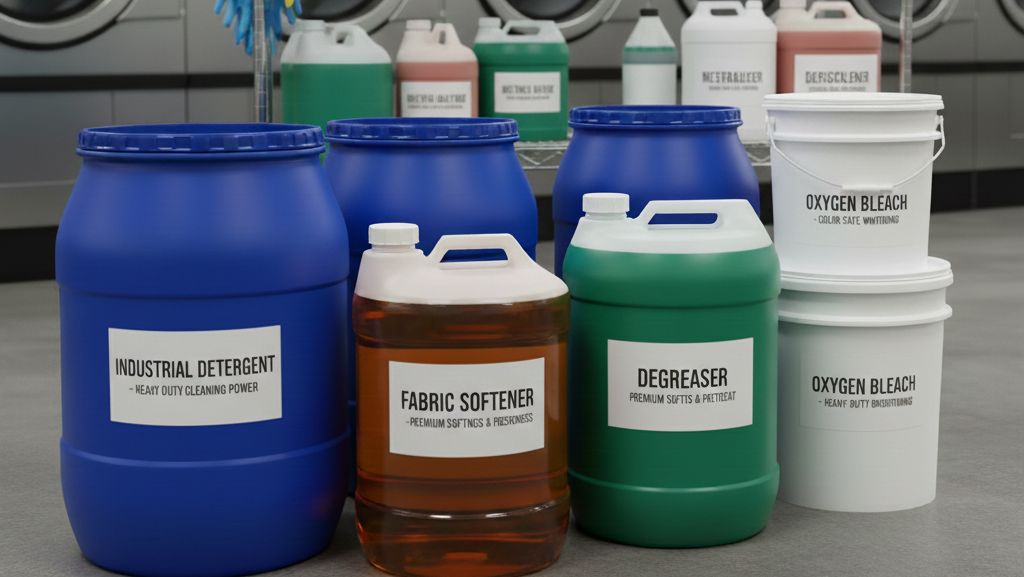
Detergent is the core chemical in every industrial laundry batch, playing a decisive role in cleaning deep stains on fabric fibers. This is a required chemical in most washing cycles, especially for fabrics in hospitals, hotels or garment factories where fabrics often have a lot of sweat, body oil and dirt accumulated over time. Most types of fabrics will be washed with this chemical such as: towels, pillowcases, blankets, bed sheets, staff uniforms, patient gowns, medical fabrics, etc.
Outstanding uses:
- Breaks down grease, oil and organic stains.
- Loosens fabric fibers to help water and chemicals penetrate deeper.
- Helps deodorize, reducing odors on towels and pillowcases.
- Helps remove stubborn stains when combined with other supporting detergents.
Ingredients usually include:
- Enzyme: breaks down the structure of protein, starch and grease.
- Surfactants: help emulsify grease and keep stains from sticking back to the fabric.
- Enhancers: balance pH, prevent residue, limit fabric hardening.
- Stabilizers: help chemicals last longer in high-temperature environments.
Advantage:
- Powerful cleaning ability, effective even with heavily soiled fabrics or large loads.
- Low foaming, suitable for industrial washing machines to help reduce rinsing pressure and save water.
- Reduces odors, keeps fabrics fragrant longer.
- Softens fabrics gently, limits dryness after many washing cycles.
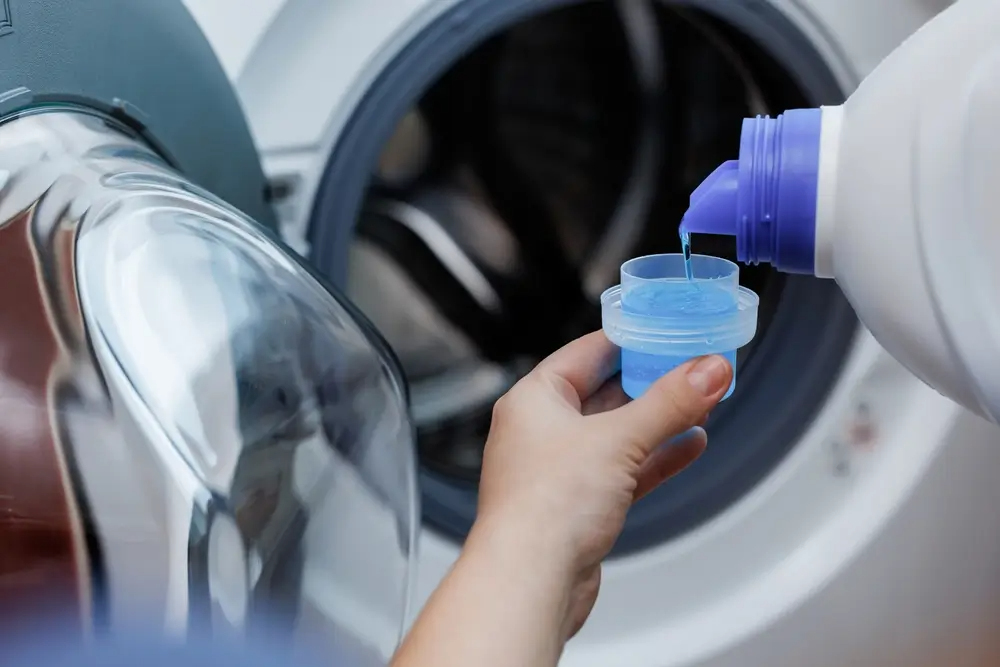
2. Oxygen Bleach
Oxygen bleach is a very popular laundry chemical used in industrial laundry, especially when processing white fabrics that require high brightness but still ensure the durability of the fabric fibers. This is a much safer choice than traditional chlorine bleach, because it does not cause fabric deterioration, does not leave an unpleasant odor and does not turn yellow over time.
Main ingredients:
- Hydrogen Peroxide (H₂O₂)
- Sodium Percarbonate, this substance when exposed to water will release oxygen to naturally clean.
These two active ingredients work by a mild oxidation mechanism, breaking down color molecules and organic stains without damaging the fabric fibers.
Suitable applications:
- Hospitals: treat bed sheets, hospital gowns, towels, and surgical gowns.
- Hotels: , bed sheets, bath towels, towels of all kinds, pillowcases that need to be absolutely white.
- Tablecloths, bath towels in restaurants, gyms, spas, and beauty care centers.
- Sewing factories or facilities that use a lot of white cotton fabric.
Outstanding uses:
- Naturally brightens white fabrics, keeping them white for a long time after many washes.
- Treats stubborn stains such as:
- Yellow stains from sweat, body oil
- Fresh blood or light dried blood
- Protein stains, organic stains
- Does not cause fabric fibers to rot, suitable for cotton, polycotton and thin fabrics.
- Reduces the risk of yellowing, which chlorine bleach often causes when used for a long time.
- Does not leave a strong smell, more friendly to laundry staff and fabric users.
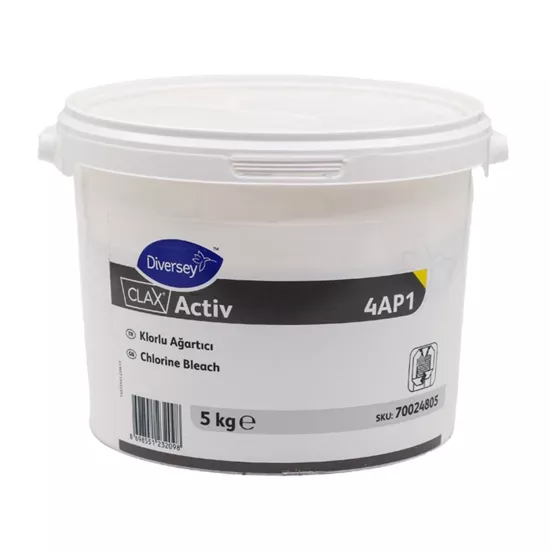
3. Chlorine Bleach
This is the strongest group of cleaning chemicals, often used in industrial laundry when it is necessary to treat heavily stained, long-term fabrics or when conventional cleaning methods are ineffective. Because of its strong oxidizing properties, this chemical must be used properly and in the right dosage to ensure safety for the fabric and the operator.
Main ingredients:
- Sodium Hypochlorite (NaOCl) – a very strong cleaning agent, capable of breaking down dirt molecules in a short time.
- Not suitable for:
- Colored fabrics (easily discolored or discolored)
- Thin fabrics, stretch fabrics
- Weak natural fabrics such as silk, wool
Main uses:
- Fast and effective sterilization of bacteria, mold and odor-causing agents.
- Strongly removes stubborn stains such as blood stains, long-term sweat stains, sunburn on white fabrics.
- Restores the whiteness of discolored fabrics, making them noticeably whiter after just one wash cycle.
Important notes when using:
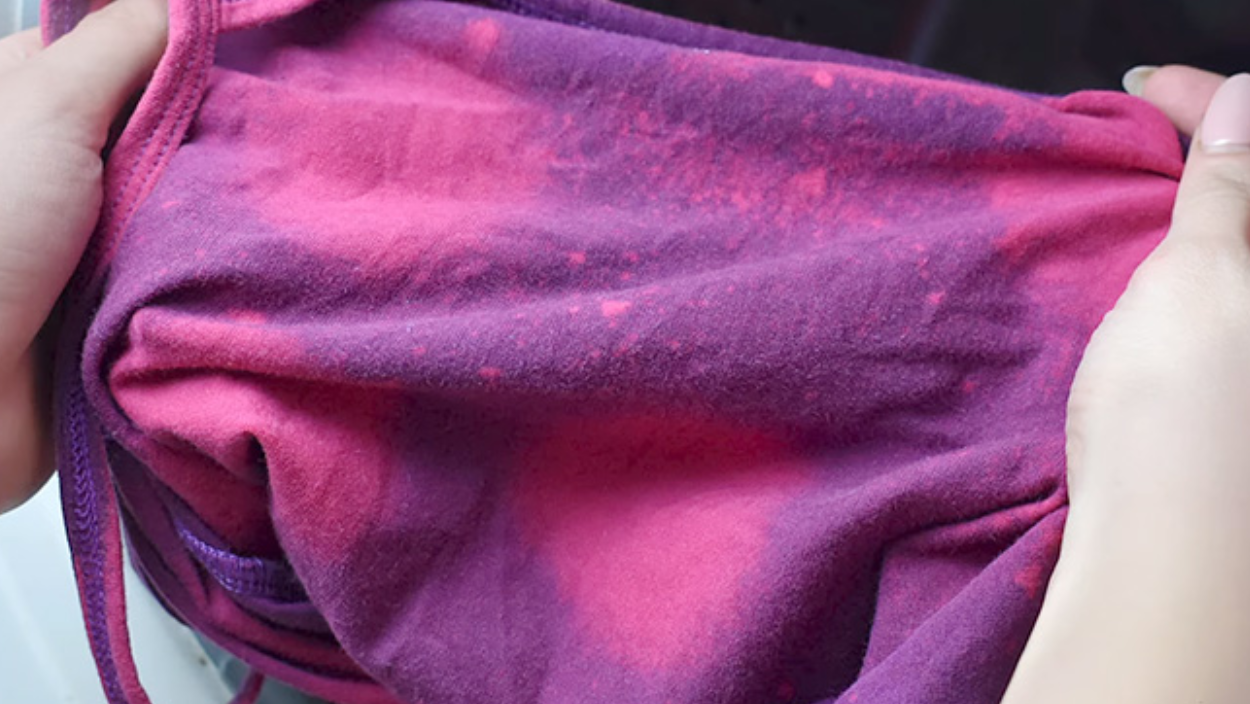
- Mix the correct dosage, as using too much can cause fabric fibers to rot, become brittle and reduce the life of the fabric.
- Do not combine with acids (such as vinegar, HCl …), as it will create extremely dangerous chlorine gas.
- Use only in cold water, avoid hot water as it can cause a stronger reaction.
- Staff must wear full protective gear when operating.
4. Alkali / Booster
Alkali is one of the effective auxiliary laundry chemicals in the industrial laundry process, especially when handling fabrics with a lot of grease or organic dirt. This is a chemical added at the beginning of the washing cycle to enhance the effectiveness of the main detergent.
Main uses:
- Increase the pH of the laundry detergent, which helps the surfactants in the detergent to maximize their effectiveness.
- Break down grease and sebum, suitable for clothes, towels, and fabrics that come into contact with food or sweat a lot.
- Soften dirt, helping them separate from the fabric fibers more easily in the following washing stages.
- Support to remove organic stains such as sauce, cooking oil, sweat, cosmetics, etc.
Often used for fabrics:
- Kitchen towels, restaurant towels – places with a lot of grease and food stains.
- Restaurant uniforms – kitchen, often exposed to grease and kitchen smoke.
- Hotel and spa fabrics help increase cleanliness and effectively deodorize.
- White fabrics need deep cleaning without damaging the fabric fibers.
Advantages of alkaline:
- Increases the overall cleaning efficiency of the entire wash.
- Reduces the amount of detergent needed, helping to optimize costs.
- Helps soften fabrics lightly, creating a cleaner and more airy feeling.
Notes when using:
- Use only the correct dosage, as too much can cause the fabric fibers to dry, stiffen or fade.
- Avoid direct contact of alkaline with the fabric without dilution.
- Trained operators are required to control the pH accurately during each wash cycle.
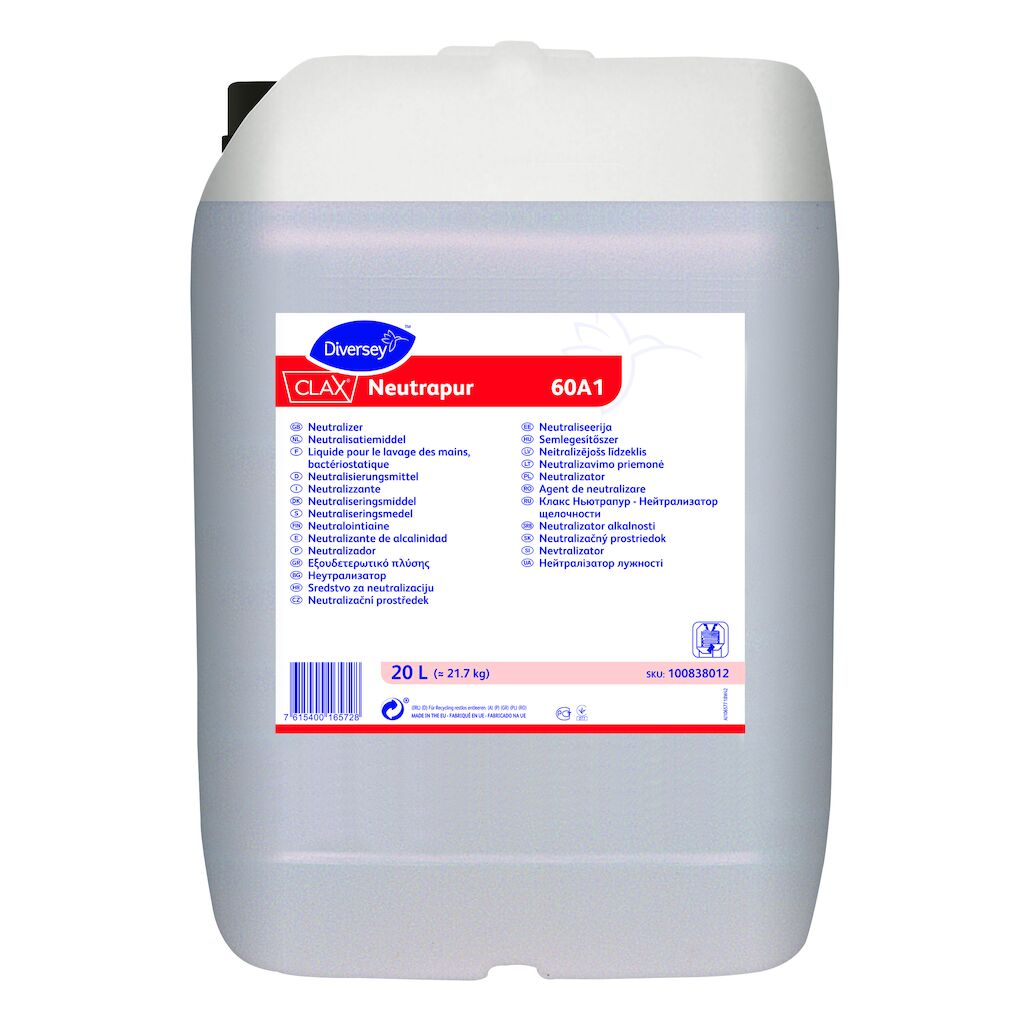
5. Neutralizer / Sour
After going through the alkaline washing step, the pH of the fabric often increases. If not rebalanced, the fabric may become dry, yellow or cause skin irritation when used. Therefore, the neutralizer is always added at the end of the washing cycle to bring the pH back to a safe level for the skin and in accordance with industrial washing standards.
Main uses:
- Neutralizes the remaining alkali, bringing the fabric pH back to the ideal level (neutral pH).
- Prevents yellowing, especially for white or sensitive fabrics.
- Reduces the risk of skin irritation, ensuring safety for users, especially patients or children.
- Makes the fabric softer, limits roughness after many washes.
- Stabilizes the color, keeps the fabric from fading or discoloring over time.
Skipping this step can cause the fabric to deteriorate quickly, causing a dry, stiff feeling and increasing the risk of allergies. Especially in medical environments, this is a mandatory laundry chemical to ensure fabrics meet microbiological safety standards and are skin-friendly.
6. Softener
Fabric softener is a chemical added at the end of the washing cycle (soft rinse), playing an important role in improving the feeling when using fabric. This is the ingredient that makes the fabric soft, fluffy, lightly fragrant, and maintains its softness longer after many washes.
Outstanding uses:
- Softens fabric fibers, making towels, robes or sheets feel softer when used.
- Reduces roughness and friction, especially useful when ironing or drying, limiting the stiffening of the fabric.
- Prevents static electricity, preventing the fabric from being attracted to dust or sticking to the skin.
- Creates a light fragrance, bringing a pleasant, luxurious experience to the user.
- Helps the fabric last longer, avoiding excessive friction that causes the fibers to break or dry out.
In large-scale washing environments such as hotels, spas, hospitals or resorts, fabrics must endure continuous washing and drying. Without the addition of softeners, fabrics quickly become stiff, reducing their lifespan and creating an uncomfortable feeling for the user. Thanks to softeners, fabrics remain soft, maintain their quality, and provide a premium experience – an important factor in hospitality and healthcare services.
7. Enzyme Detergent
In many industrial laundries today, enzyme detergents are being used as an enhanced ingredient to treat stubborn stains that conventional detergents cannot completely remove. Enzymes work on a biodegradable mechanism, helping to break down the structure of stains and push them out of the fabric fibers more easily. Popular enzyme detergents in industrial laundry
1. Protease enzyme – Treats blood stains & protein stains
- Specialized in decomposing proteins in blood, dry sweat, and body fluids
- Very effective for bed sheets, spa towels, bath towels, and medical uniforms – F&B
2. Lipase enzyme – Degreasing
- Strong effect on fats, cooking oils, cosmetics, and massage oils
- Commonly used for restaurant fabrics, kitchens, spas, and hair salons
3. Amylase enzyme – Degreasing starch & food
- Works well with porridge, rice, sauces, and powders
- Very suitable for napkins, kitchen uniforms, and children’s towels
Outstanding benefits of using enzymes in laundry
- Deep cleaning without damaging fabric fibers
Enzymes work at the molecular level so they do not cause corrosion like strong alkalis or chlorine bleach.
The fabric after washing remains soft, durable, and does not become fibrous.
- Outstanding effectiveness with organic stains
Most stains in daily life or services (blood, food, grease, etc.) are organic.
Enzymes help break them down faster, cleaner, and do not leave a shadow on the fabric.
- Reduce washing time, save chemicals
When enzymes in laundry chemicals work well, the laundry can:
-
- Shorten soaking time or washing time
- Reduce the amount of strong detergents (alkali, bleach)
- Optimize costs while still ensuring deep cleaning
8. Notes when choosing laundry chemicals for industrial laundry factories
To optimize costs and washing quality, laundry factories should choose laundry chemicals according to the following criteria:
✔ Prioritize brands with safety certification and clear origin
A qualified chemical must come with full MSDS, ISO certification, skin safety testing and biodegradability. This is especially important for fabric processing factories in hotels, hospitals and spas, where hygiene and disinfection requirements are extremely strict. Chemicals with clear origins are not only safe but also help prolong the life of machines and fabrics.
✔ Choosing low-foaming laundry chemicals will be more suitable for industrial machines
Industrial washing machines operate at high spin speeds and large amounts of water, so they do not need foam like household laundry detergents. Low foaming chemicals help:
- Reduce the number of rinses to save electricity and water
- Shorten the washing cycle
- Avoid foam overflow that damages internal components
✔ Choose chemicals based on fabric material
Each type of fabric requires a different treatment mechanism to avoid damage:
- White cotton fabric: prioritize using oxygen bleach to keep the fabric fibers durable and bright for a long time.
- Medical fabric, hospital fabric: need to add sanitizer to kill bacteria, ensure biological safety.
- Colored fabric: absolutely do not use chlorine bleach, avoid fading or color bleeding.
- Classifying fabrics and choosing the right chemicals not only helps clean but also optimizes the cost of replacing new fabric.
✔ Avoid chemicals with too strong scents
Fabric in hospitals or spas often comes into direct contact with the skin of patients/customers. Chemicals with too strong scents can easily cause irritation, and customers who are sensitive to scents will feel uncomfortable. Laundry facilities should prioritize the type with light fragrance or no fragrance (neutral fragrance).
✔ Check the pH and solubility
The detergent needs to be completely dissolved to avoid residue on the fabric or washing drum. The pH must be within the allowable range to:
- Avoid yellowing or roughening the fabric
- Do not cause odors or residue on the fabric fibers
- Protect users from skin irritation
Detergents are the core factor that determines the operational quality of an industrial laundry facility. Each type of detergent has its own uses, from bleaching, alkalizing, neutralizing, to disinfecting and softening. Using the right type of detergent and the right dosage not only improves cleaning efficiency but also keeps fabrics durable, bright whit,e and safe for users.
>>>>> Read more: Ways To Remove Yellow Stains On White Clothes Effectively
Green Laundry – the leading company in providing quality and professional laundry solutions in Vietnam
Email: greenlaundry@giatuixanh.com
Phone: 028 36 222 180
Fanpage: Giặt Ủi Xanh – Chuyên Giặt Ủi Công Nghiệp
Address: Lot A57/II-Lot 58/II, Road No. 2D, Vinh Loc Industrial Park, Binh Tan Ward, Ho Chi Minh City.