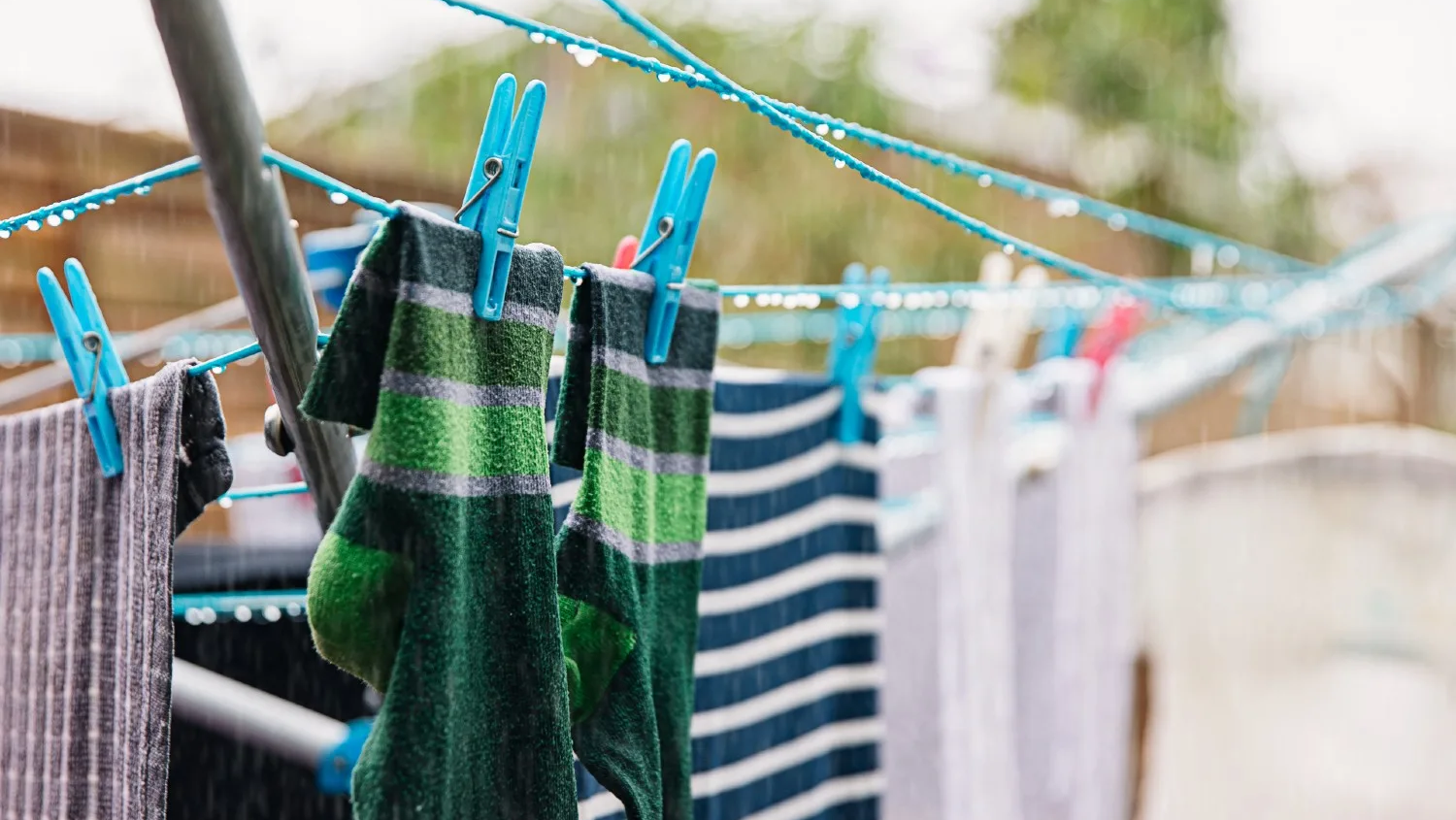
The rainy season brings with it damp air, lack of sunshine, and prolonged high humidity. This is also the time when many families experience clothes smelling musty and damp, even after thorough washing. Not only is it uncomfortable to wear, but smelly clothes in the rainy season also affect health, especially for sensitive skin and young children.
So, what causes clothes to smell easily in the rainy season, and how can you keep your clothes smelling fresh and dry even in unfavorable weather? This article will help you solve this problem completely.
1. Why do clothes easily smell in the rainy season?
The rainy season makes it difficult for many families to keep their clothes from smelling, even after thorough washing and using fabric softener. The reasons are not only due to the weather but also directly related to daily washing habits and drying space.
1.1. Prolonged High Humidity
During the rainy season, air humidity frequently exceeds 80-90%, even higher on days with continuous rain. This causes clothes to take a long time to dry after washing, leaving the fabric constantly damp.
When clothes are not completely dry, bacteria and mold thrive, creating unpleasant odors. This is why, even after washing, clothes don’t always achieve the desired odor-free state.
1.2. Drying Clothes in Enclosed, Lacking Airflow
On rainy days, many families are forced to dry clothes indoors, in hallways, or on balconies with poor ventilation. The lack of sunlight and air circulation causes clothes to dry more slowly than usual.
The damp and stuffy drying space inadvertently becomes an ideal environment for odor-causing bacteria to grow, making clothes prone to musty smells and difficult to maintain the desired odor-free state after drying.
1.3. Clothes not completely clean after washing
Another common cause of smelly clothes is dirt and soap residue left on the fabric. Sweat, oil, and dead skin cells, if not washed away, become food for bacteria.
In the humid environment of the rainy season, bacteria multiply faster, causing clothes to smell bad even after washing. This is a factor that makes it difficult for many people to maintain smell-free clothes for a long time.
1.4. Damp, dirty, and infrequently cleaned washing machine
A washing drum that hasn’t been cleaned for a long time, or detergent or fabric softener trays that are damp and moldy, are also sources of odor-causing bacteria.
During washing, bacteria from the washing machine can transfer back to the clothes, causing them to smell bad immediately after drying. Therefore, if you want your clothes to always be clean and fragrant and not smell bad during the rainy season, regular cleaning of the washing machine is essential.
2. How to Wash Clothes Properly to Avoid Odors During the Rainy Season
Besides weather, the way you wash your clothes daily plays a crucial role in preventing them from smelling during the rainy season. By adjusting a few small habits, you can significantly reduce the unpleasant musty odor after each wash.
2.1. Don’t Leave Dirty Clothes for Too Long Before Washing
Accumulating dirty clothes for days before washing is a leading cause of odor, especially during the rainy season. Items that absorb a lot of sweat, such as t-shirts, office wear, and sportswear, create ideal conditions for bacteria to thrive if left for too long.
Ideally, sweaty clothes should be washed within 24 hours of use. This helps limit odor-causing bacteria from the start, contributing to keeping clothes smelling fresh and clean for longer.
2.2. Sort Clothes Before Washing
Sorting clothes is an important but often overlooked step. To ensure deep cleaning and minimize odors, you should:
Separate heavily soiled clothes.
Separate towels, sportswear, and everyday wear.
Do not wash heavily soiled clothes with lightly soiled or lightweight items.
Sorting helps the washing machine clean more effectively, limiting the spread of bacteria and odors between fabrics, thus preventing clothes from smelling after washing.
2.3. Use the right amount of detergent.
Many people think that the more detergent they use, the cleaner their clothes will be, but in reality, overuse is the reason clothes smell bad during the rainy season. Soap residue clinging to the fabric fibers, combined with high humidity, creates an ideal environment for odor-producing bacteria.
To keep clothes clean and odor-free, you should only use detergent according to the manufacturer’s recommended dosage, appropriate for the amount of laundry.
2.4. Prioritize using low-foaming detergents
During the rainy season, low-foaming detergents are a very suitable choice because:
They rinse more easily
They leave less residue on the fabric
They reduce the risk of clothes developing a musty smell
Thanks to their effective cleaning ability and limited soap residue, low-foaming detergents help clothes dry faster and maintain a fresh, odor-free state even during prolonged humid weather.
3. Tips for Deodorizing and Disinfecting Clothes During the Rainy Season
In addition to proper washing techniques, you can apply some small tips during the washing process to increase cleaning efficiency, reduce odor-causing bacteria, and keep clothes odor-free even during prolonged humid weather.
3.1. Wash clothes with warm water at the correct temperature
Washing with warm water is one of the most effective ways to kill odor-causing bacteria clinging to the fabric.
The ideal water temperature should range from 40–60°C, depending on the fabric type and manufacturer’s instructions.
Warm water helps dissolve sweat, oil, and dirt better, reducing the risk of clothes smelling musty after drying. However, you should not use this method with thin fabrics, fabrics that shrink easily, or fabrics that deform easily, to avoid damaging the clothes. When used correctly, washing with warm water will help keep clothes smelling fresh longer during the rainy season.
3.2. Using baking soda or white vinegar in the right amount
Baking soda and white vinegar are two familiar ingredients that can effectively help eliminate odors:
- Baking soda helps neutralize odors and gently cleans fabric fibers.
- White vinegar has a mild antibacterial effect, limiting the growth of odor-causing bacteria.
You should only add a small amount of baking soda or white vinegar to the final wash or rinse cycle. Overuse can affect the fabric and the lifespan of your washing machine. When used correctly, this is a simple solution to keep clothes cleaner and prevent odors in high humidity conditions.
3.3. Choosing fabric softener with odor-neutralizing properties
During the rainy season, fabric softener not only creates a pleasant scent but also helps reduce odors and limit bacteria on clothes. You should prioritize choosing fabric softeners that:
- Have a light, not overly strong, fragrance
- Have antibacterial or odor-neutralizing properties
- Do not leave a sticky feeling on the fabric
- Avoiding strongly scented fabric softeners will prevent clothes from smelling strongly while still damp, while maintaining a pleasant, odor-free feel when worn.
4. How to dry clothes to prevent odors in the rainy season
Drying clothes correctly is a crucial step in preventing odors during the rainy season. No matter how clean you wash them, if dried incorrectly, clothes can easily develop a musty smell because they don’t dry completely. Therefore, you need to pay special attention to space, arrangement, and air circulation when drying clothes.
4.1. Dry clothes in a well-ventilated area with good air circulation
During the rainy season, you should prioritize drying clothes in well-ventilated locations such as balconies, near windows, or places with natural air circulation. Avoid drying clothes against walls, ceilings, or in enclosed corners, as these areas often have high humidity, causing clothes to dry slowly and easily develop odors.
When drying, maintain a reasonable distance between clothes to allow air to circulate evenly around the fabric. This method helps clothes dry faster and prevents them from smelling after drying.
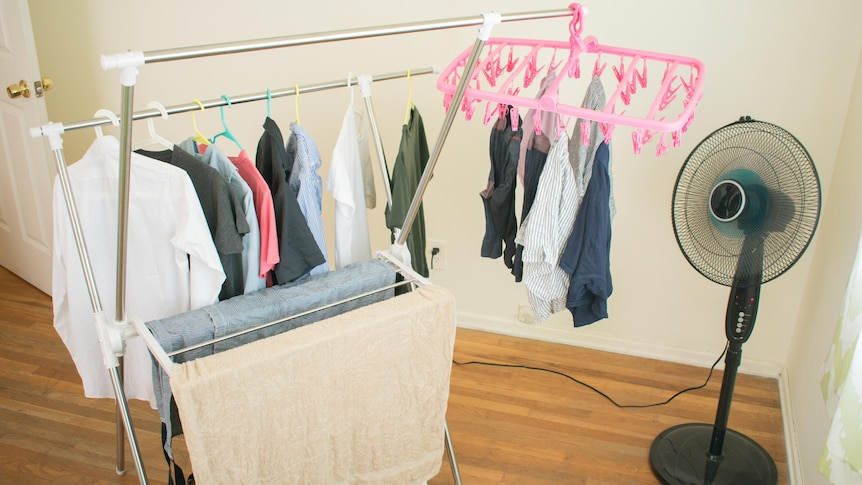
4.2. Use a fan or dehumidifier to help
During prolonged rainy days with no sunshine or weak wind, you should proactively use an electric fan or dehumidifier to help with drying.
Clothes drying methods. Fans help circulate air continuously, preventing moisture from accumulating around clothes. Meanwhile, dehumidifiers reduce humidity in the room, creating a drier environment. As a result, clothes dry faster, smell less, and it’s easier to achieve the goal of keeping clothes odor-free even when drying in a closed space.
4.3. Avoid stacking or overcrowding clothes
A common mistake is hanging too many clothes on the same line or stacking them to save space.
This drying method causes clothes to:
- Dry unevenly
- The outside dries first, while the inside remains damp
- Easily develop odors and mold
The feeling of “dry outside – damp inside” is the direct cause of unpleasant odors when worn. Therefore, to ensure clothes don’t smell, you should space out the clothes and prioritize drying thinly and in a well-ventilated area.
5. Using a Dryer is an Effective Solution During the Rainy Season
In conditions of prolonged rain, high humidity, and lack of sunshine, a clothes dryer is almost the best solution to ensure clothes don’t smell musty. If you have the means to use one, it’s considered a “powerful assistant” to completely solve the problem of damp and moldy clothes during the rainy season.
Dryers help clothes dry completely in a short time, minimizing residual moisture in the fabric fibers – the main cause of bacteria and mold growth. When clothes are thoroughly dried, unpleasant odors are significantly reduced, and clothes stay fresher for longer after washing.
In addition, proper drying helps maintain the shape of clothes better than drying them in a closed room, in a poorly ventilated area, or drying them for too long in a humid environment. This is especially important for office wear, uniforms, or fabrics that need to maintain their shape.
To ensure your dryer works effectively while protecting your clothes, please note:
- Prioritize gentle drying, reverse drying, or wrinkle-free drying.
- Choose the appropriate temperature for each fabric type, avoiding excessively high temperatures that can cause shrinkage or damage to the fibers.
- Do not overload the dryer to ensure even drying.
When used correctly, a dryer not only helps clothes dry quickly but is also an effective solution to keep clothes smelling fresh throughout the humid rainy season.
6. Regularly clean your washing machine to prevent clothes from smelling bad.
Many people focus on washing and drying clothes but neglect cleaning their washing machines, even though this directly affects whether clothes will smell. A damp, dirty washing machine with lots of soap residue and bacteria will cause clothes to smell bad from the start, even if you wash them correctly.
To keep clothes from smelling bad, everyone should maintain a regular washing machine cleaning routine:
- Clean the drum 1–2 times per month to remove accumulated dirt and bacteria.
- Dry the rubber seal after each wash to prevent water from accumulating and causing mold.
- Open the washing machine lid after each wash to allow air circulation and keep the drum dry.
- Clean the detergent and fabric softener dispensers, as these are places where residue and mold easily accumulate.
A clean and dry washing machine will ensure clothes are properly cleaned, reduce odor-causing bacteria, and keep clothes smelling fresh, achieving the goal of odor-free clothes from the very first step.
7. Some Habits to Avoid During the Rainy Season
Even with careful washing and drying, just a few of the following mistakes can quickly cause clothes to smell bad:
✘ Leaving damp clothes overnight
✘ Drying clothes in a closed, poorly ventilated room
✘ Not drying clothes immediately after washing
✘ Using too much fabric softener with a strong scent
✘ Keeping the drying room door closed all day
These habits trap moisture in the fabric fibers, creating conditions for bacteria and mold to grow, making it difficult for clothes to remain odor-free.
>>>>>>> Read more: What is the difference between laundry detergent and laundry powder?
Green Laundry – the leading company in providing quality and professional laundry solutions in Vietnam
Email: greenlaundry@giatuixanh.com
Phone: 028 36 222 180
Fanpage: Giặt Ủi Xanh – Chuyên Giặt Ủi Công Nghiệp
Address: Lot A57/II-Lot 58/II, Road No. 2D, Vinh Loc Industrial Park, Binh Tan Ward, Ho Chi Minh City.