A stuffed animal is not only a familiar toy for children but also a decorative item or a bedtime companion for many adults. However, few people realize that a stuffed animal is one of the household items most likely to accumulate dust, bacteria, sweat, and allergens. If not cleaned regularly and properly, a stuffed animal can become a breeding ground for bacteria, posing health risks—especially for young children.
The problem is that many people wash stuffed animals at home using incorrect methods, causing them to lose their shape, become flat, stiff, or develop unpleasant odors after drying. That’s why knowing how to wash a stuffed animal properly at home is essential if you want to keep it clean, soft, and durable over time.
1. Why should you wash a stuffed animal regularly?
A stuffed animal frequently comes into contact with hands, faces, sweat, and surrounding air. Over time, fine dust, bacteria, dust mites, and allergens settle deep into the fabric and inner filling.
If a stuffed animal is not washed regularly, users—especially children—may experience skin irritation, allergic rhinitis, or respiratory issues. In addition, stuffed animals left unwashed for long periods often develop a damp, musty odor that is difficult to remove.
Properly washing a stuffed animal at home not only cleans it effectively but also helps protect your family’s health.
2. Sort stuffed animals before washing – a step you should not skip
Not all stuffed animals can be washed in the same way. Before washing, carefully check the outer fabric, inner filling, and size of the stuffed animal.
Small stuffed animals with sturdy fabric and tight stitching can usually be machine-washed. In contrast, large stuffed animals, those with accessories such as plastic eyes, bows, removable clothing, or long-pile fur should be hand-washed to avoid damage.
Sorting stuffed animals from the start helps you choose the most suitable washing method and reduces the risk of torn seams, fabric damage, or flattened filling.
3. How to hand wash a stuffed animal at home
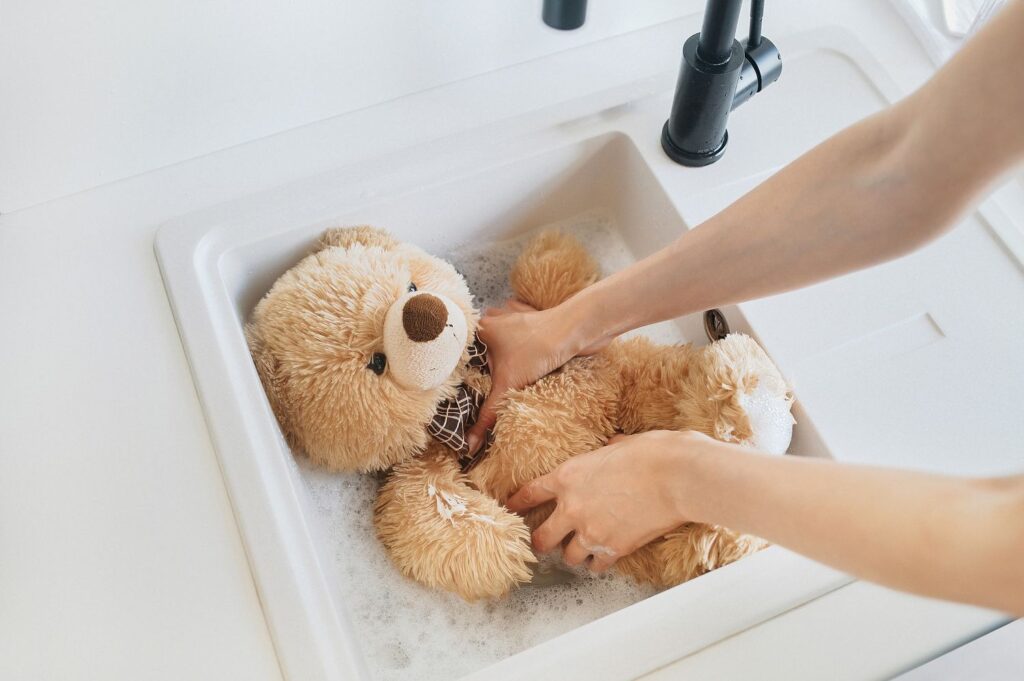
Hand washing is the safest method, especially for large stuffed animals or those with sentimental value.
First, soak the stuffed animal in lukewarm water for about 10–15 minutes to loosen dirt. Use a mild detergent, preferably one designed for babies or delicate fabrics. When washing, avoid scrubbing aggressively or twisting the stuffed animal, as this can cause the inner filling to clump.
Instead, gently squeeze each section, focusing on areas that get dirty easily such as the hands, feet, and face. Rinse thoroughly several times to remove all detergent residue—this is a key factor in preventing stiffness and odors after drying.
4. How to safely machine wash a stuffed animal
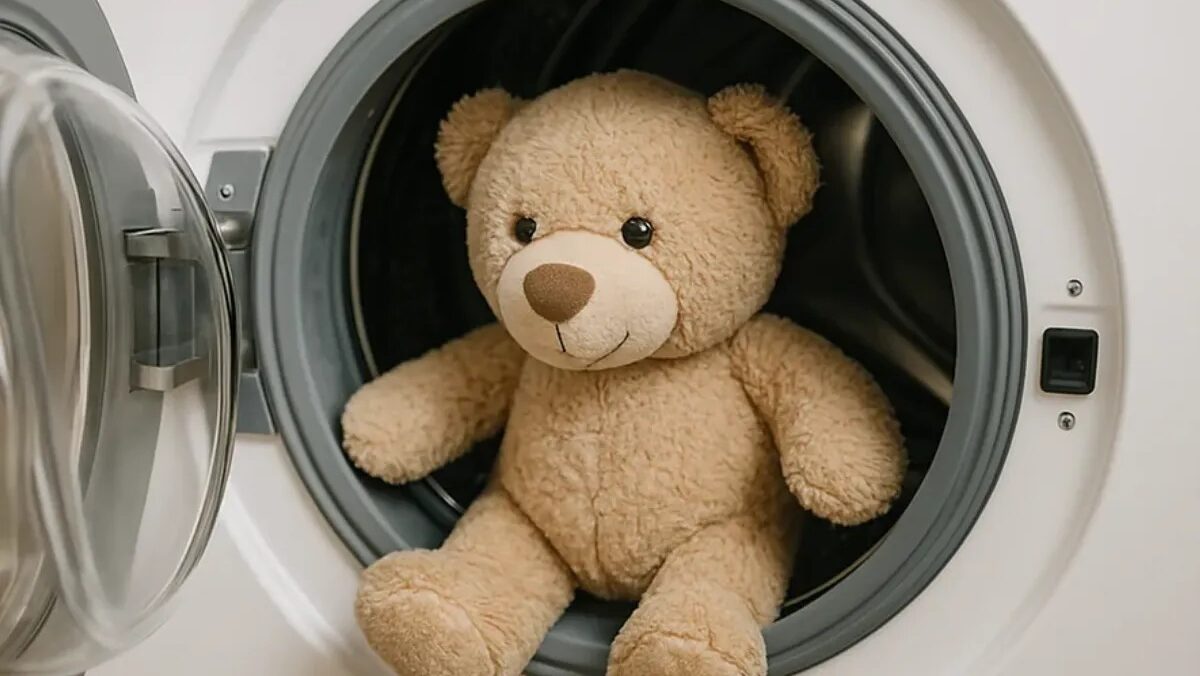
For small and durable stuffed animals, machine washing can save time if done correctly.
Before placing the stuffed animal in the washing machine, put it inside a laundry bag to reduce friction. Choose a gentle or delicate cycle and use cold or slightly warm water. Avoid high-speed spin cycles, as strong centrifugal force can damage stitching and flatten the filling.
When machine washing a stuffed animal, wash only one or two at a time to ensure even cleaning and prevent excessive compression.
5. What detergent should you use for washing a stuffed animal?
Detergent choice plays a major role in keeping a stuffed animal soft and safe. Regular powdered detergents are not recommended, as they often leave residue and make the fabric stiff.
Instead, choose a mild, low-foam liquid detergent with no fragrance or a very light scent. For children’s stuffed animals, use detergents without harsh chemicals to avoid skin irritation.
Avoid using heavily scented fabric softeners, as strong fragrances can linger inside the filling and cause discomfort.
6. How to dry a stuffed animal without flattening the filling
Drying is the step that determines whether a stuffed animal stays soft and maintains its shape. After washing, do not wring or twist the stuffed animal—gently press out excess water instead.
If using a dryer, select a low-heat or air-dry setting. Adding a few dryer balls can help keep the filling fluffy. For air drying, place the stuffed animal in a well-ventilated area and avoid damp, enclosed spaces.
During drying, gently pat and reshape the stuffed animal from time to time so the filling dries evenly and does not clump.
7. How often should you wash a stuffed animal?
Depending on usage, a stuffed animal should be washed every 1–2 months. Stuffed animals that children hug or sleep with daily should be washed more frequently to maintain hygiene.
Additionally, if a stuffed animal falls on the floor, gets visibly dirty, or develops an unusual odor, it should be washed immediately rather than left untreated, as bacteria can grow quickly in humid conditions.
8. Common mistakes when washing a stuffed animal at home
Common mistakes that cause stuffed animals to deteriorate quickly include washing with very hot water, using too much detergent, spinning too aggressively, or drying in poorly ventilated indoor areas.
These habits not only shorten the lifespan of a stuffed animal but also lead to musty odors and loss of original softness.
Keep your stuffed animal clean and safe with the right washing method
Washing a stuffed animal at home is not difficult—but it must be done correctly. From sorting and choosing the appropriate washing method to using mild detergents and drying properly, every step directly affects the durability and softness of the stuffed animal.
By following these guidelines, you can keep your stuffed animal clean, fresh, and safe for everyday use—even when washing at home.
>>>>>>> Read more: 5 tips for washing blankets for the end of the year
Green Laundry – the leading company in providing quality and professional laundry solutions in Vietnam
Email: greenlaundry@giatuixanh.com
Phone: 028 36 222 180
Fanpage: Giặt Ủi Xanh – Chuyên Giặt Ủi Công Nghiệp
Address: Lot A57/II-Lot 58/II, Road No. 2D, Vinh Loc Industrial Park, Binh Tan Ward, Ho Chi Minh City.