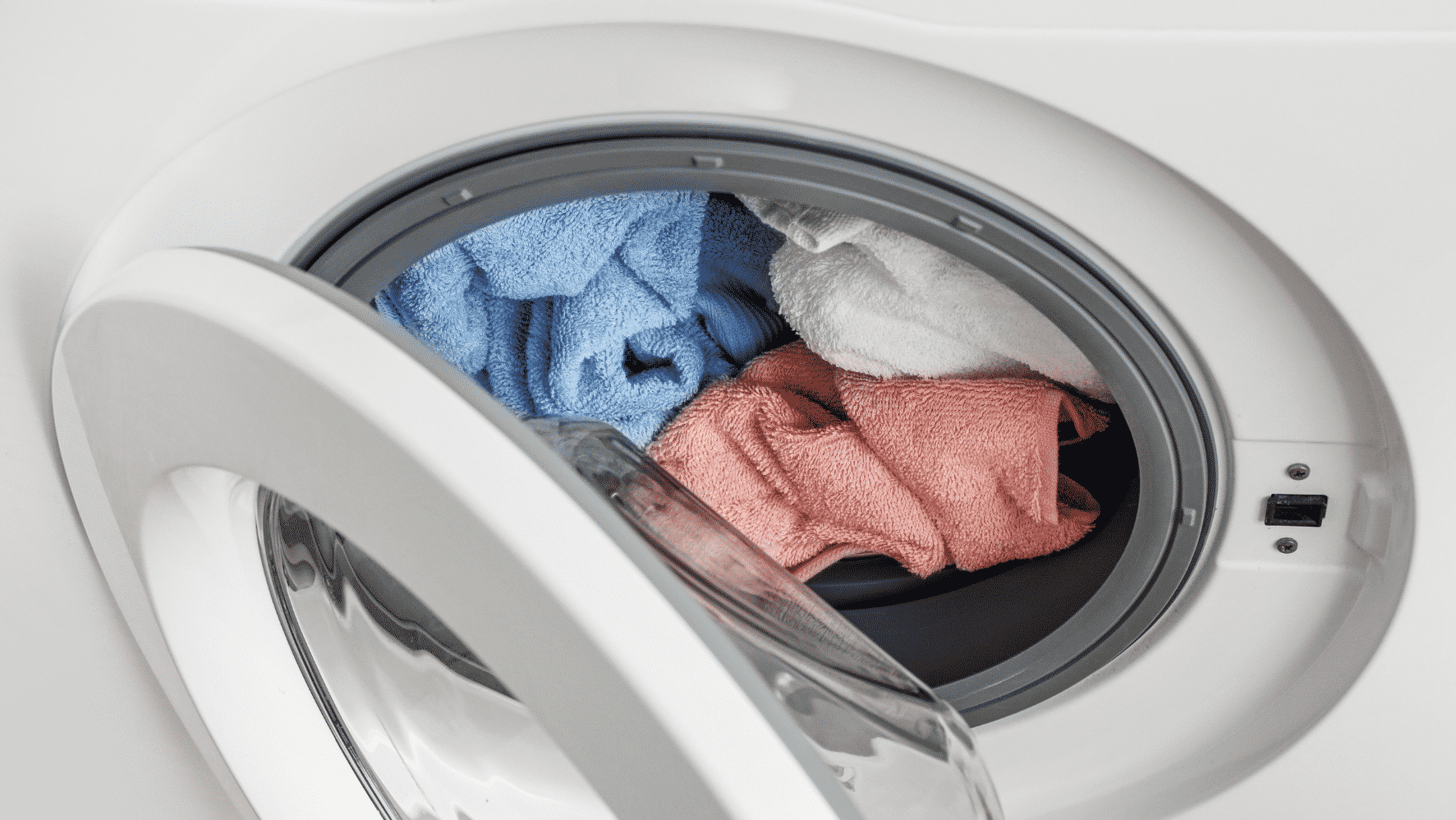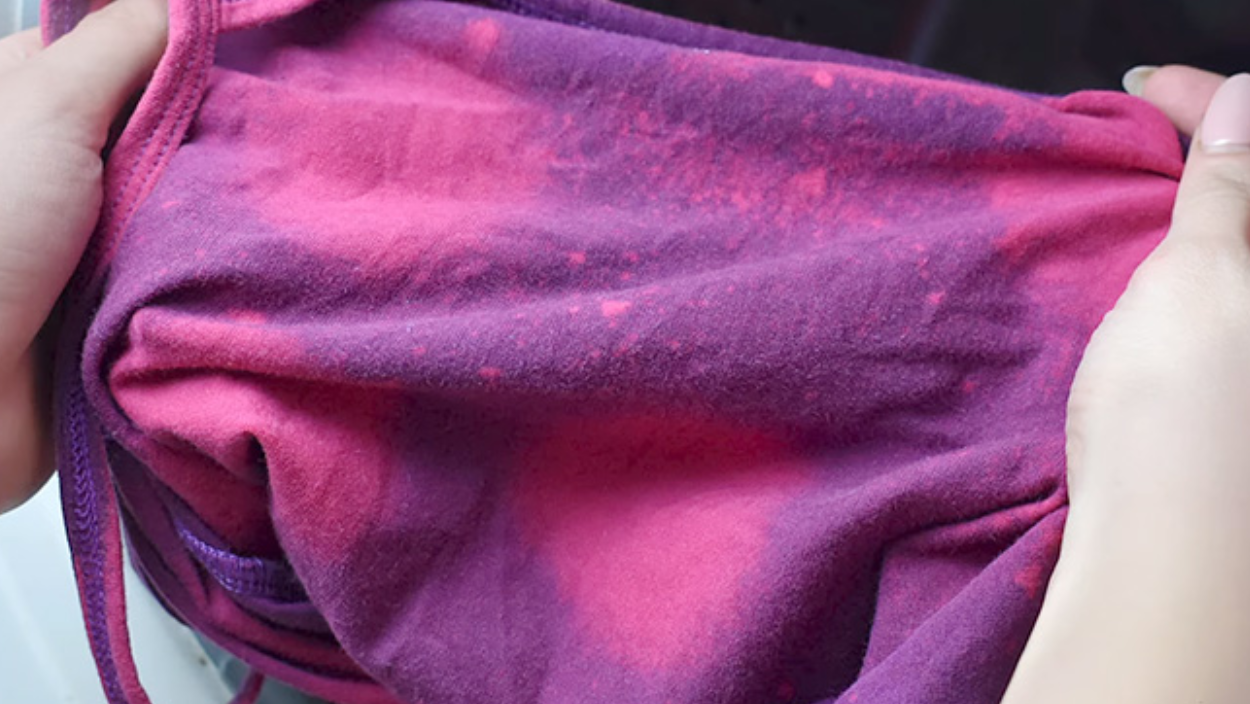
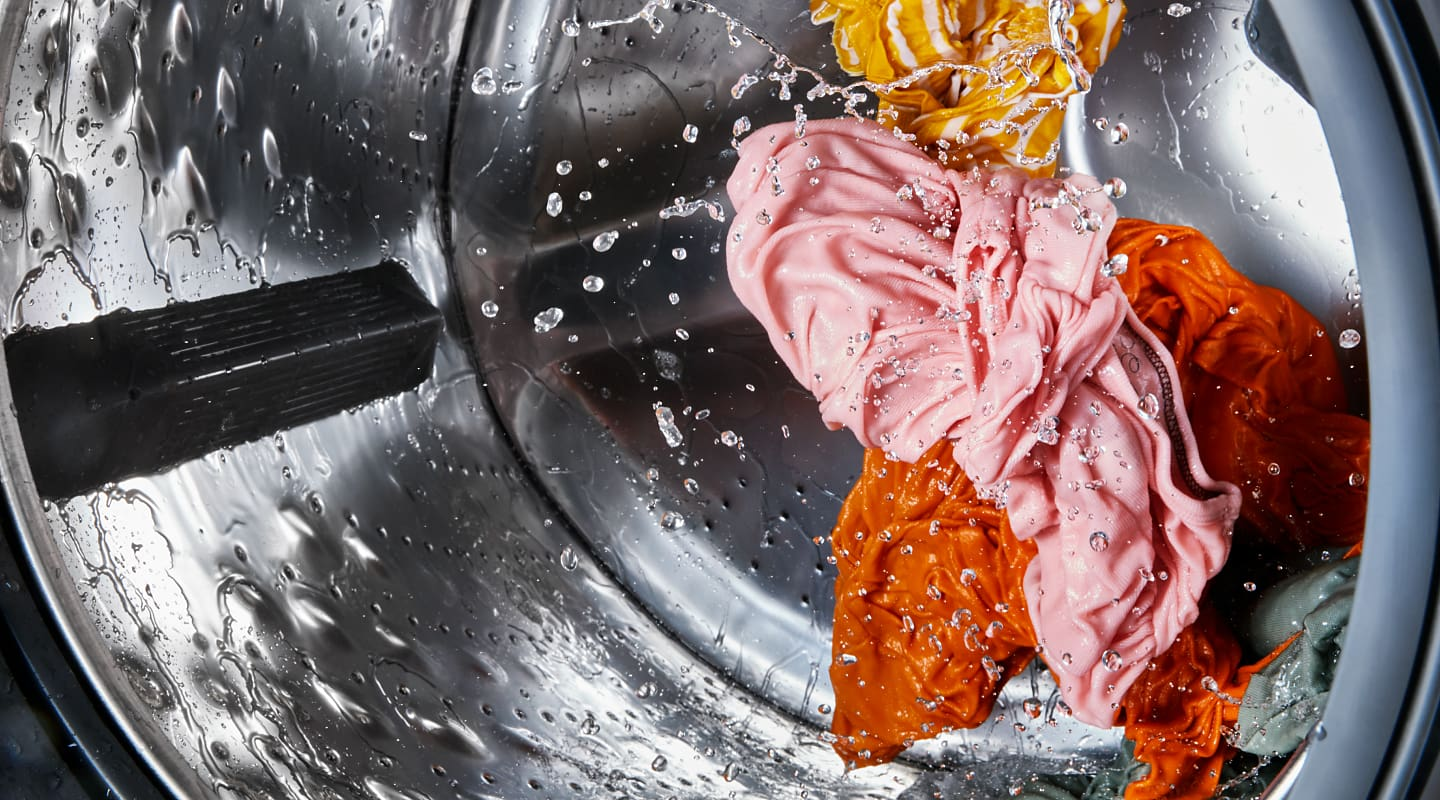
Detergent residue on clothes is a common issue in everyday laundry routines. The white streaks or powdery deposits left behind after washing not only make clothes look unattractive but can also create discomfort when worn. This problem is often caused by improper washing machine use, excessive detergent, or an unsuitable laundry process. Understanding the causes and applying the right solutions can help keep clothes cleaner, softer, and free from recurring detergent buildup.
1. Why Does Detergent Residue Remain on Clothes?
Understanding the cause is the first step toward solving detergent residue on clothes effectively.
In most cases, residue appears when detergent is not fully dissolved in water or is not completely rinsed away during the wash cycle. As a result, detergent particles remain on the fabric surface, creating visible white marks, especially on dark-colored garments.
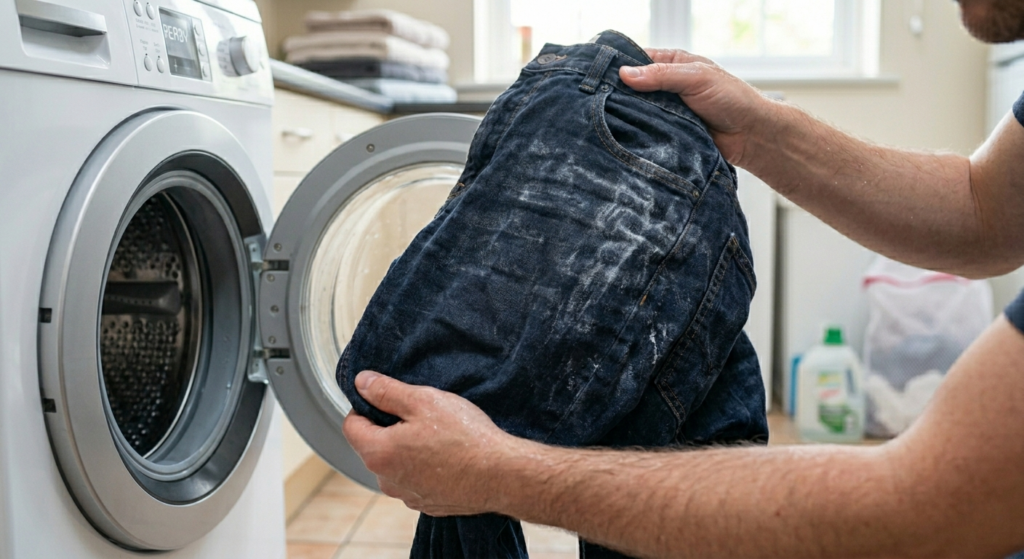
Several factors can increase the likelihood of detergent residue:
- Overloading the washing machine
- Using too much detergent
- Weak water pressure
- A washing machine with built-up residue
- Selecting the wrong wash cycle
When these factors occur together, clothes can easily develop detergent residue even after a complete wash cycle.
2. How Does Detergent Residue Affect Clothing?
Many people focus only on whether their clothes look clean and smell fresh after washing. However, detergent residue left on fabric can significantly affect clothing quality over time.
When detergent particles continue to accumulate within fabric fibers, they may reduce durability and make garments less comfortable to wear.
- Fabric Becomes Stiff: Long-term detergent buildup can cause fibers to lose their natural softness, making clothes feel rough and less comfortable.
- Reduced Softness: Residue trapped within fabrics can prevent clothing from maintaining its original soft and breathable feel, especially in towels and frequently worn garments.
- Skin Irritation: For individuals with sensitive skin, detergent residue may cause itching, irritation, or discomfort when clothing comes into direct contact with the skin.
- Unpleasant Odors: Excessive residue can trap moisture and bacteria within fabric fibers, leading to unpleasant smells even shortly after washing.
This issue is especially important for children’s clothing and garments worn by people with sensitive skin, as minimizing detergent residue helps reduce the risk of skin irritation.
In addition to affecting clothing, detergent buildup inside the washing machine can reduce washing performance, contribute to drum contamination, and create unpleasant odors over time.
3. How to Remove Detergent Residue on Clothes
3.1. Rewash with Clean Water
One of the simplest and most effective ways to remove detergent residue on clothes is to run an additional rinse cycle using clean water.
An extra rinse helps flush away detergent particles that remain trapped in fabric fibers, especially when the residue is fresh and has not yet bonded strongly to the fabric surface.
If your washing machine includes an extra rinse or deep rinse option, using this feature can significantly improve cleaning performance and reduce detergent residue.
3.2. Shake Garments Before Rewashing
If visible detergent deposits remain on clothing, gently shake or brush off the excess residue before rewashing.
This simple step removes loose detergent particles from the fabric surface and prevents them from spreading to other areas during the next wash cycle.
Shaking garments beforehand also allows water to penetrate fabrics more evenly, improving cleaning effectiveness.
3.3. Soak Clothes in Warm Water
Warm water helps dissolve detergent residue more effectively than cold water.
By soaking clothes in warm water for an appropriate period, detergent particles soften and become easier to remove during rinsing or rewashing.
However, always check the garment care label before using warm water, as certain fabrics may shrink or become damaged when exposed to higher temperatures.
3.4. Avoid Adding More Detergent
A common mistake occurs when people notice residue on clothes and respond by adding even more detergent in an attempt to improve cleaning.
In reality, this often makes the problem worse by increasing the amount of detergent left behind.
In many cases, clothing simply needs more thorough rinsing rather than additional detergent. When dealing with residue, focus on improving rinse performance instead of adding more cleaning products.
4. Common Mistakes That Cause More Detergent Residue
Detergent residue on clothes often results from improper laundry habits.
Using Too Much Detergent: This is the most common cause. Many people assume that more detergent equals cleaner clothes. In reality, excess detergent may not dissolve completely and can remain trapped within fabric fibers.
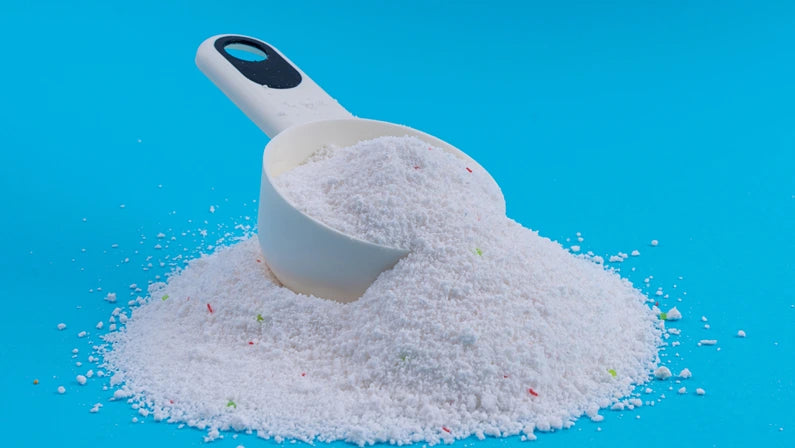
Overloading the Washing Machine: When too many garments are placed into a single load, water and detergent cannot circulate properly throughout the drum. This reduces detergent dissolution and rinsing efficiency, making residue more likely to remain on clothing.
Failing to Clean the Washing Machine: Over time, detergent deposits, dirt, and bacteria can accumulate inside the drum and drainage system. Without regular cleaning, these contaminants may transfer back onto clothing during future wash cycles.
Using the Wrong Detergent: Some powdered detergents naturally produce more residue than others, especially if they are not suitable for the washing machine type or local water conditions. This increases the likelihood of undissolved detergent leaving white streaks on clothing.
5. How to Prevent Detergent Residue on Clothes
Prevention is often more effective than treatment.
To reduce the risk of detergent residue on clothes, consider the following practices:
- Use the recommended amount of detergent
- Avoid overloading the washing machine
- Dissolve powdered detergent before hand washing
- Clean the washing machine regularly
- Choose the appropriate rinse settings
Small adjustments to your laundry routine can significantly improve washing performance and reduce detergent buildup.
6. When Should You Switch to Liquid Detergent?
Compared to traditional washing powder, liquid detergent generally dissolves more quickly and is less likely to leave residue when used correctly.
This is why many households choose liquid detergent to:
- Reduce white marks on clothing
- Minimize detergent buildup
- Keep clothes softer
- Improve washing performance at lower temperatures
However, proper dosage remains essential regardless of the detergent type used.
7. How Detergent Residue Affects Fabric Durability
Over time, detergent residue on clothes can affect more than appearance.
When detergent continues to accumulate within fabric fibers:
- Fabrics may become stiff
- Clothes may age more quickly
- Breathability may decrease
- Overall garment quality may decline
Managing detergent usage and following proper laundry practices can help clothes stay cleaner, softer, and in better condition for longer.
Detergent residue on clothes is a common laundry issue, but it can be effectively prevented and resolved by understanding its causes.
Whether the problem results from excessive detergent use, overloaded wash loads, or poor washing machine maintenance, each habit can affect clothing quality and washing performance.
By improving your laundry routine, using the correct amount of detergent, and maintaining your washing machine regularly, you can keep clothes cleaner, softer, and free from unwanted residue.
Proper laundry care not only improves the appearance of your clothes but also helps protect fabric durability and enhance everyday comfort.
>>>> Read more: Why is baking soda considered a powerful helper in laundry care?
Green Laundry – the leading company in providing quality and professional laundry solutions in Vietnam
Email: greenlaundry@giatuixanh.com
Phone: 028 36 222 180
Fanpage: Giặt Ủi Xanh – Chuyên Giặt Ủi Công Nghiệp
Address: Lot A57/II-Lot 58/II, Road No. 2D, Vinh Loc Industrial Park, Binh Tan Ward, Ho Chi Minh City.