
As businesses increasingly focus on operational efficiency and sustainable development, water and energy use in the laundry industry is no longer simply a matter of cost. Effective control of these two resources is also closely related to equipment performance, washing quality, process optimization, and a company’s long-term development strategy. So, why does the laundry industry need to pay particular attention to water and energy use? What factors affect consumption levels, and what can businesses do to optimize them? Let Green Laundry explore these questions in the article below.
1. Why Does the Laundry Industry Use Large Amounts of Water and Energy?
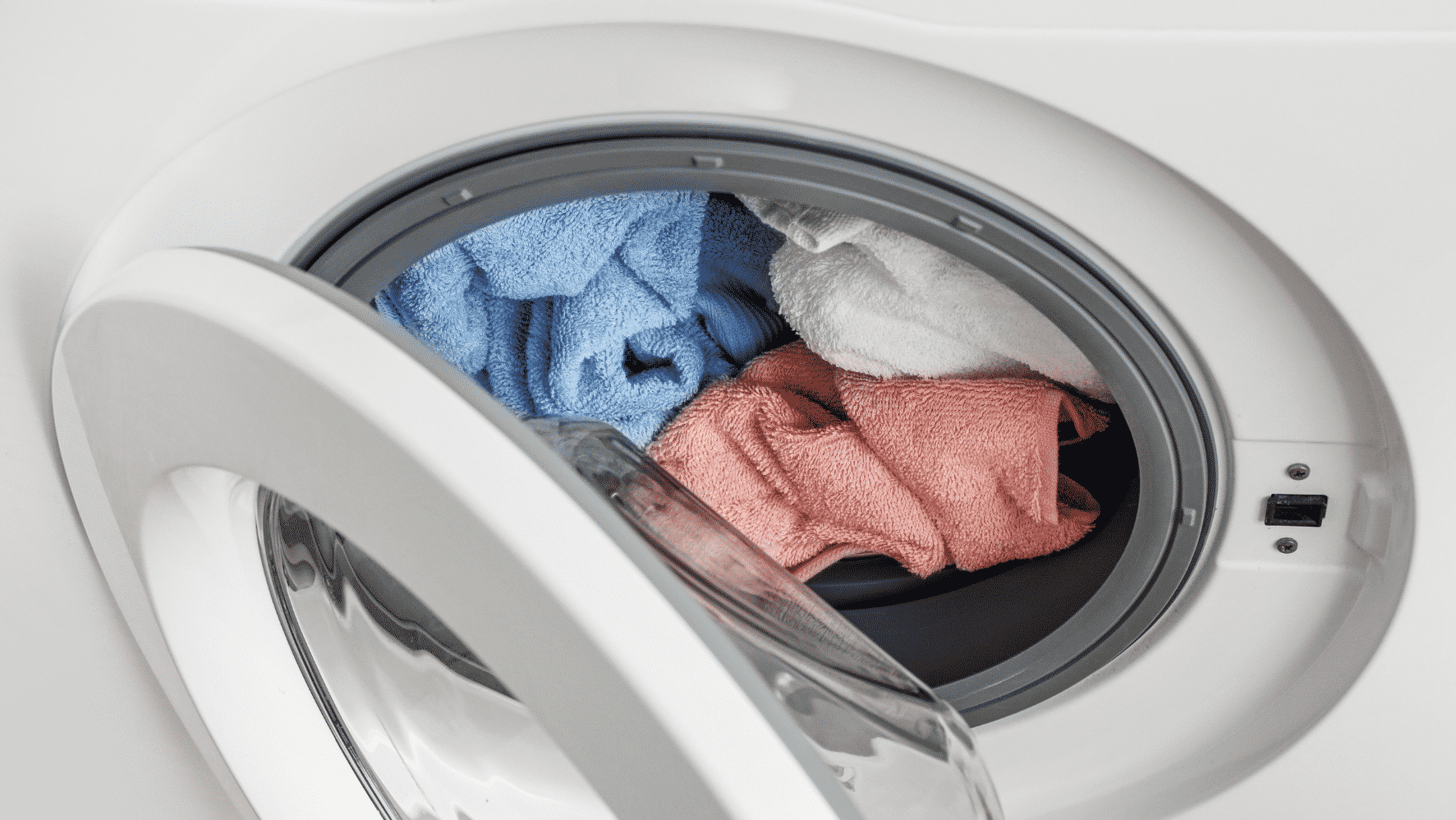
In a typical washing process, water is used at various stages, from wetting textile items and the main washing cycle to rinsing and certain specialized treatment processes. At the same time, energy is required to operate washing machines, extractors, drying systems, ironing machines, and various other supporting equipment.
For household use, the amount of textile items in each wash load is relatively small, so overall consumption may not be particularly significant. However, in industrial laundry operations, the volume of items that need to be processed each day is much larger. A production line may need to operate continuously to meet requirements for both processing volume and turnaround time.
This makes water and energy use in the laundry industry a factor that needs to be considered from the process design stage. Without proper control, businesses may consume more resources than necessary without necessarily achieving a corresponding improvement in cleaning performance.
Water and electricity are not the only resources involved. A laundry process also requires chemicals, labor, operating time, and equipment maintenance. Therefore, resource optimization should not simply be understood as “using as little as possible.” Instead, the goal should be to use the appropriate amount needed to ensure quality while minimizing unnecessary waste.
2. How Does Water and Energy Use Affect Laundry Operations?
2.1. Impact on Operating Costs
One of the most noticeable impacts of water and energy use in the laundry industry is operating cost. As the volume of laundry being processed increases, the demand for water, electricity, or fuel for drying and ironing systems also increases.
If each wash cycle uses more water than necessary or equipment has to operate for longer periods because the process has not been properly optimized, the accumulated costs over time can become significant. This is particularly important for industrial laundry facilities that operate at high frequency.
Therefore, saving water and energy is not only environmentally beneficial but can also help businesses manage their production costs more effectively.
2.2. Impact on Equipment Performance
Water and energy used during the washing process are closely related to how laundry equipment is operated. For example, if washing machines frequently operate with unsuitable loads, inappropriate washing programs are selected, or items need to be rewashed repeatedly, operating time and resource consumption will increase.
Similarly, drying or ironing systems operating under unsuitable conditions may require more time to achieve the desired level of dryness or finishing quality. Therefore, water and energy use in the laundry industry needs to be considered together with the performance of the entire system.
2.3. Impact on Sustainable Development Strategies
The laundry industry uses resources every day to support production and service activities. When businesses proactively reduce waste of water, energy, and related resources, their operations can move toward a more sustainable direction.
This is also why many laundry facilities today are focusing on upgrading equipment, controlling processes, and monitoring consumption rather than concentrating solely on output volume.
3. Factors That Increase Water and Energy Consumption in Laundry Operations
Water and energy consumption is not fixed. Instead, it depends on many factors throughout the entire process.
The first factor is the type of textile items being washed. Towels, bed linens, uniforms, clothing, and healthcare textiles have different characteristics, so their requirements for washing programs, temperature, processing time, and number of rinse cycles may also vary. Not all textile items should be processed using the same procedure.
The next factor is the load size of each washing cycle. If too little laundry is loaded into the machine, the business may need to run more cycles to process the same total volume of items. On the other hand, if too much laundry is loaded, the machine may not operate efficiently, the textiles may not be cleaned properly, and reprocessing may be required.
Laundry equipment is another important factor. Machines differ in design, capacity, and consumption levels. Equipment selected appropriately for the scale of production can help businesses better control water and energy use in the laundry industry.
In addition, program settings, water temperature, washing time, number of rinse cycles, spin speed, and drying methods can all affect consumption levels. A process that has not been standardized can easily result in each wash cycle using resources differently.
Finally, the condition of the machinery also matters. Equipment that is not properly maintained or cleaned may operate less efficiently, extend processing time, and increase energy requirements.
4. How Can Water and Energy Use Be Optimized?
Optimizing water and energy use in the laundry industry should begin by looking at the entire process rather than focusing on only one individual stage.
4.1. Sort Textile Items Before Washing
Sorting textile items according to material, color, level of soiling, and intended use helps determine the appropriate washing program. When each group of items is processed according to its specific requirements, businesses can avoid using unnecessarily intensive programs or extending washing times without need.
In particular, proper sorting from the beginning can also reduce the risk of damage or the need for reprocessing, thereby supporting better control of water and energy use in the laundry industry.
4.2. Control the Machine Load
Operating machines at an appropriate load level is one of the important factors in laundry operations. Each piece of equipment has its own designed capacity and should be operated within the appropriate range.
If machines frequently operate underloaded, the number of wash cycles required may increase. On the other hand, overloading can affect cleaning performance and place greater stress on the equipment.
4.3. Choose the Appropriate Washing Program
Not every type of textile requires the same temperature, washing time, or number of rinse cycles. Developing appropriate programs for different textile groups helps prevent water and energy from being used beyond actual requirements.
In an industrial environment, standardizing washing programs also makes it easier for employees to follow procedures and maintain more consistent quality control.
4.4. Make Effective Use of Spinning and Control the Drying Process
The spinning stage plays an important role in reducing the amount of residual water in textile items before they are transferred to the drying stage. When textiles are effectively processed during spinning, the drying system may not need to operate for as long to achieve the required level of dryness.
Therefore, optimizing water and energy use in the laundry industry does not simply mean reducing the amount of water used by washing machines. It also requires consideration of the connection between different stages of the process.
4.5. Perform Regular Equipment Maintenance
Regularly maintained machinery can help minimize problems during operation. Inspecting water supply and drainage systems, heating components, dryers, ironing machines, and related equipment can also help identify abnormal conditions at an early stage.
This is an important part of maintaining performance and controlling water and energy use in the laundry industry over the long term.
5. How Do Technology and Automation Help Optimize Water and Energy Use?
As the scale of laundry operations increases, resource optimization cannot rely solely on the experience of operators. Technology and automation can help control processes more consistently.
Modern laundry systems can be programmed according to different textile groups, load sizes, or processing requirements. When parameters are accurately controlled, water, chemicals, and operating time can be used according to established procedures rather than relying entirely on manual operations.
Automation can also help reduce variations between different wash cycles. In industrial production, even a small deviation repeated hundreds of times can result in significant resource consumption. Therefore, controlling water and energy use in the laundry industry needs to be carried out both at the individual load level and across the entire production line.
In addition to washing machines, drying and ironing systems also need to be considered as part of an integrated process. A production line may have modern equipment, but if the processes between different stages are not properly coordinated, resource waste can still occur.
This is also why automation is playing an increasingly important role in industrial laundry operations. When operational data is monitored and processes are standardized, businesses have a basis for identifying stages that consume large amounts of resources and finding ways to improve them.
6. Sustainable Laundry Requires Long-Term Investment
Paying attention to water and energy use in the laundry industry should not be viewed as a short-term activity. It is part of building an efficient, stable operating model oriented toward sustainable development.
For laundry businesses serving hotels, spas, restaurants, or hospitals, resource optimization must also go hand in hand with textile quality requirements. Reducing water or energy consumption at the expense of cleaning performance would not be an appropriate solution. The goal should be to achieve a balance between quality, productivity, and resource consumption.
At Green Laundry, process control is considered in relation to textile quality, processing productivity, and operational efficiency. Machinery, washing procedures, chemicals, and finishing stages need to work together to ensure that textile items meet the required standards while minimizing unnecessary operations.
This is particularly important in industrial laundry operations, where the volume of textiles processed each day can be very large. Controlling water and energy use in the laundry industry therefore becomes increasingly meaningful. Even relatively small improvements at individual stages can contribute to significant improvements across the entire production line.
In the long term, using water and energy appropriately in the laundry industry not only helps businesses control costs but also contributes to building a more resource-responsible production process. This approach is consistent with modern trends, where business efficiency is increasingly connected to the ability to use resources appropriately.
Water and energy are two essential resources in laundry operations, particularly for facilities processing large volumes of textiles. Therefore, water and energy use in the laundry industry needs to be considered from equipment selection and washing program design to textile sorting, operation, drying, ironing, and equipment maintenance.
Resource optimization does not mean mechanically cutting consumption. Instead, it means using the appropriate amount of water and energy needed to ensure cleaning performance, textile quality, and operational productivity. When different stages are properly connected and controlled, businesses can gradually move toward a sustainable and efficient laundry model that meets their long-term development needs.
>>>> Read more: Why is baking soda considered a powerful helper in laundry care?
Green Laundry – the leading company in providing quality and professional laundry solutions in Vietnam
Email: greenlaundry@giatuixanh.com
Phone: 028 36 222 180
Fanpage: Giặt Ủi Xanh – Chuyên Giặt Ủi Công Nghiệp
Address: Lot A57/II-Lot 58/II, Road No. 2D, Vinh Loc Industrial Park, Binh Tan Ward, Ho Chi Minh City.