Shoes can easily become soaked when you get caught in the rain. If they are not dried properly, wet shoes may develop unpleasant odors, mold, or even suffer damage to their materials. Many people make the mistake of leaving their shoes under strong sunlight or using high heat to dry them as quickly as possible. However, these methods are not always suitable and may cause shoes to lose their shape, develop loose adhesive, or fade. So, what should you do when you get home with wet shoes after being caught in the rain? How can you dry your shoes quickly while maintaining their shape and quality? Let’s find out in the article below.
1. Why Should You Dry Your Shoes Immediately After Getting Caught in the Rain?
After being exposed to rain, water can soak into the outer fabric, inner lining, and soles of your shoes. If the moisture remains for an extended period, your shoes may experience several problems during use.
1.1. Reduce Unpleasant Odors
A damp environment inside your shoes can encourage unpleasant odors, especially when the shoes have also been exposed to foot sweat for an extended period. Simply wiping the outside of the shoes without drying the inside may leave a musty smell even after the surface appears dry.
Therefore, the proper way to dry shoes should focus on both the exterior and interior.
1.2. Reduce the Risk of Mold and Mildew
Shoes that are stored while still damp may develop signs of mold, such as a musty smell or unusual spots on the surface.
This problem is particularly likely to occur when shoes are placed in a cabinet, box, or closed bag immediately after getting caught in the rain.
Therefore, make sure your shoes are completely dry before storing them.
1.3. Protect the Material and Durability of Your Shoes
Water and moisture can affect various types of shoe materials when they remain exposed for an extended period.
In particular, the adhesive connecting the sole to the upper may be affected by repeated exposure to water or unsuitable temperatures.
Properly drying your shoes as soon as possible after getting caught in the rain can help minimize these effects.
2. How to Dry Shoes Quickly After Getting Caught in the Rain
Depending on how wet the shoes are and what material they are made of, you can choose an appropriate drying method.
2.1. Remove the Shoelaces and Insoles
As soon as you get home, remove the shoelaces and take out the insoles if the shoe design allows you to do so.
Separating these components allows air to reach more areas of the shoes, helping moisture escape more effectively.
In particular, insoles often retain a significant amount of water and sweat. Leaving them inside the shoes can make the drying process take longer.
2.2. Use a Dry Towel to Absorb Water
Before using other methods to dry your shoes quickly, use a clean, dry towel to absorb excess water from the outside.
Avoid twisting or squeezing the shoes too hard, as this may cause them to lose their shape.
Instead, gently press the towel against wet areas to absorb as much water as possible.
2.3. Use Paper to Absorb Moisture Inside the Shoes
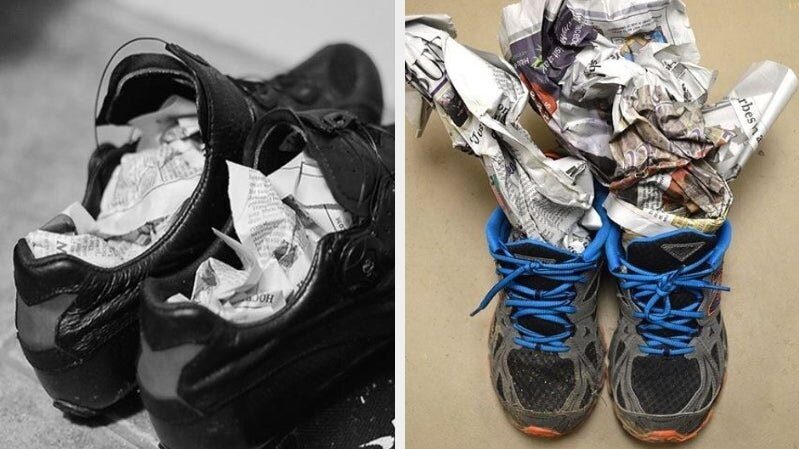
One simple way to help dry wet shoes is to use clean paper. Crumple the paper into small pieces and place them inside the shoes. The paper can help absorb excess moisture and water remaining in the lining.
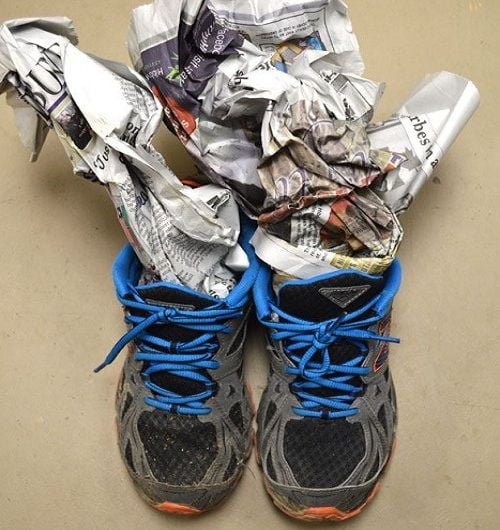
Once the paper becomes damp, replace it with dry paper so that moisture absorption can continue. Avoid stuffing the shoes too tightly, as this can cause them to lose their shape and prevent proper airflow.
2.4. Place the Shoes in a Dry and Well-Ventilated Area
After removing excess water, place the shoes in a dry area with good airflow.
You can open the shoe opening as much as possible to allow air to reach the inside. If the shoes have shoelaces, loosen them to improve ventilation.
Properly drying shoes does not necessarily mean placing them under strong sunlight. A dry, well-ventilated space can also help water evaporate.
2.5. Use a Fan to Help Dry the Shoes
If you need to dry your shoes quickly, place them in front of a fan at an appropriate distance.
Continuous airflow can help moisture escape more quickly than simply leaving the shoes in an enclosed space.
Keep the shoes open and point the openings toward the airflow so that air can circulate inside.
This is a relatively simple method that does not expose the surface of the shoes to excessive heat.
2.6. Use a Hair Dryer on the Appropriate Setting
In some cases, a hair dryer can be used to help dry shoes.
However, avoid using excessively high heat or directing hot air continuously at one particular area.
High temperatures can affect the adhesive, materials, and shape of the shoes. If you use a hair dryer, choose a low-heat or cool-air setting and maintain an appropriate distance from the shoes.
Before using this method, check the care instructions for the specific type of shoes.
3. Should You Dry Your Shoes in the Sun After Getting Caught in the Rain?
Drying shoes in the sun can help water evaporate more quickly, but not all types of shoes are suitable for direct sunlight.
For certain shoes, high temperatures may cause the material to become stiff, fade, or affect the adhesive.
Therefore, instead of leaving your shoes under strong sunlight for an extended period, it is better to prioritize a dry, well-ventilated area with good airflow.
If you need to dry your shoes quickly after getting caught in the rain, you can combine several methods, such as absorbing excess water with a towel, using paper to absorb moisture inside, and using a fan to support the drying process.
4. Mistakes to Avoid When Drying Shoes
4.1. Using Excessive Heat
One of the most common mistakes when dealing with wet shoes is using a hair dryer on a high-heat setting in an attempt to dry them quickly.
However, high temperatures can affect the shoe material and adhesive.
Therefore, it is better to use cool air or a low-temperature setting when using a hair dryer.
4.2. Leaving Shoes Under Strong Sunlight for Too Long
Prolonged exposure to direct sunlight can cause certain materials to fade or change.
This is particularly noticeable with dark-colored shoes, as improper drying may result in uneven coloration.
4.3. Storing Shoes While They Are Still Damp
The surface of the shoes may appear dry while the insoles or inner layers are still slightly damp.
If you immediately place them in a box or enclosed cabinet, the remaining moisture will have difficulty escaping and may cause unpleasant odors.
Therefore, after drying your shoes, check the inside carefully before storing them.
4.4. Twisting or Squeezing Shoes Too Hard
When shoes become heavily soaked, avoid twisting or squeezing them forcefully to remove water.
Doing so may cause the shoes to lose their shape and may affect the stitching or overall structure.
Instead, use a towel to absorb excess water and allow the shoes to release moisture naturally.
5. How to Remove Odors from Wet Shoes After Getting Caught in the Rain
In addition to drying your shoes, removing odors from wet shoes is also an important step if they have been soaked for an extended period.
First, make sure the shoes are completely dry. Using deodorizing products while the inside of the shoes is still damp usually does not address the underlying cause of the odor.
You can remove the insoles and clean them separately if permitted by the manufacturer. Then, place both the shoes and insoles in a well-ventilated area until they are completely dry.
If the odor remains or the shoes are heavily soiled after being exposed to rain, you may consider washing the shoes according to the manufacturer’s care instructions.
Do not soak the entire shoe in water or use strong chemicals without first determining the shoe material and its water resistance.
6. How to Prevent Shoes from Getting Wet and Smelling After Rain
In addition to knowing how to dry shoes, proper storage and regular care can help reduce moisture and odor.
Clean Your Shoes Regularly
Dirt, sweat, and other substances that accumulate on shoes can contribute to unpleasant odors. Therefore, clean your shoes regularly according to the care instructions for each material.
Do Not Store Shoes While They Are Still Damp
This is the most important rule. After getting caught in the rain, allow your shoes to dry completely before placing them in a cabinet or box.
Store Shoes in a Well-Ventilated Area
Avoid keeping shoes in overly enclosed or humid spaces for extended periods.
Use Water-Repellent Products When Appropriate
Some shoe-care products can help reduce water absorption on the surface. However, choose products that are compatible with the shoe material and use them according to the instructions.
7. When Should You Wash Your Shoes or Seek Professional Services?
Not every case of wet shoes can be completely resolved simply by air-drying or using a hair dryer. If your shoes are not only wet but also covered in mud, have persistent odors, or show signs of mold, deeper cleaning may be necessary.
For shoes made from special materials such as leather, suede, or delicate fabrics, using unsuitable chemicals or drying methods on your own may cause damage.
In these situations, professional shoe-cleaning services can assess the material and condition of the shoes before selecting an appropriate cleaning and drying method. For products that require proper cleaning and drying procedures, choosing a method suitable for each material is an important factor.
For shoes or other items that are heavily soiled, damp, or have unpleasant odors, assessing their condition before treatment can help determine the most suitable method. In addition to the cleaning process, the drying stage should also be carefully controlled to prevent the product from remaining damp after treatment.
If you do not have enough time to carry out the steps for drying your shoes quickly after getting caught in the rain, using a professional service can be a more convenient option.
Drying shoes quickly after getting caught in the rain is not simply a matter of placing them under the sun. It requires a combination of steps, including removing the insoles, absorbing excess water, removing moisture from the inside, and placing the shoes in a well-ventilated area. When you need to speed up the drying process, you can use a fan or a hair dryer on an appropriate setting. However, excessive heat should be avoided to prevent damage to the shoe material, shape, and adhesive.
In addition, allowing shoes to dry completely before storing them can help reduce unpleasant odors and mold. If your shoes are heavily soiled, have persistent odors, or require deeper treatment, you may consider washing them or using a professional shoe-cleaning service. Properly caring for and drying your shoes after each rainy outing can help them maintain their shape, minimize unpleasant odors, and stay in good condition for longer.
>>>> Read more: Why is baking soda considered a powerful helper in laundry care?
Green Laundry – the leading company in providing quality and professional laundry solutions in Vietnam
Email: greenlaundry@giatuixanh.com
Phone: 028 36 222 180
Fanpage: Giặt Ủi Xanh – Chuyên Giặt Ủi Công Nghiệp
Address: Lot A57/II-Lot 58/II, Road No. 2D, Vinh Loc Industrial Park, Binh Tan Ward, Ho Chi Minh City.