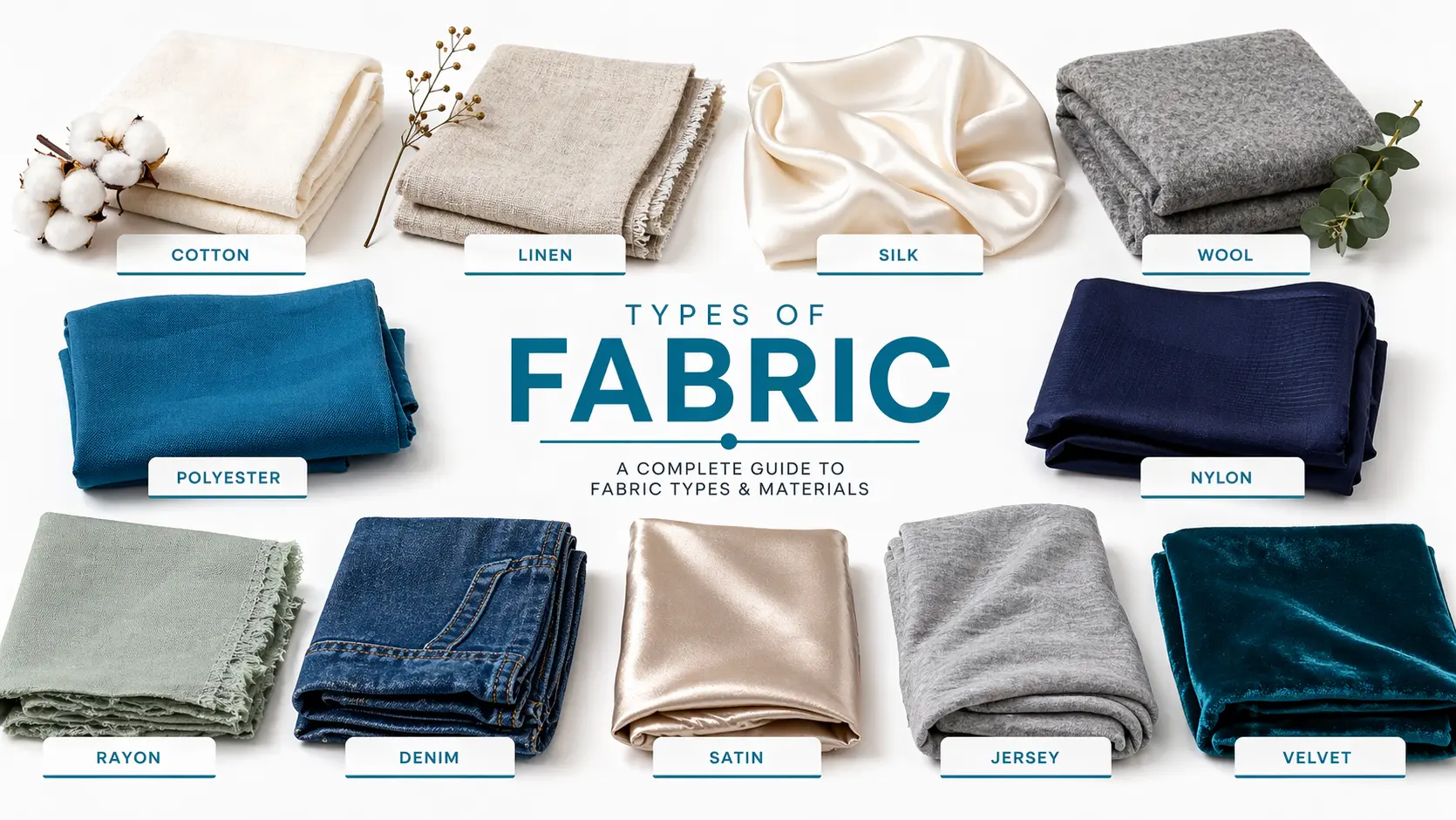
When choosing bath towels, face towels, bed sheets, uniforms, or other textile products, consumers often consider material, color, softness, and durability. However, alongside these factors, there is another important technical specification commonly found on product labels or supplier documentation: GSM.
In the textile industry, the GSM of towels and fabrics is an important specification that helps manufacturers, suppliers, and buyers evaluate material characteristics. This measurement can help indicate relative thickness, the feel of a product, and its suitability for specific purposes.
1. What Is GSM and How Is It Calculated?
GSM stands for Grams per Square Meter. It is a unit used to express the mass of a material per unit area and is commonly used to determine the weight or fabric weight of textile materials and products.
Simply put, GSM indicates how many grams one square meter of fabric weighs. For example, a fabric with a weight of 150 GSM means that each square meter of the material weighs approximately 150 grams.
GSM is calculated by dividing the weight of a fabric sample by its area. The measurement unit is grams per square meter (g/m²).
Calculation formula:
GSM = Fabric sample weight (grams) / Fabric sample area (m²)
For example, if a fabric sample has an area of 1 m² and weighs 200 grams, its fabric weight is 200 GSM.
If the fabric sample has a smaller area, the area must first be converted into square meters before performing the calculation.
Example: A square fabric sample measuring 10 cm × 10 cm has an area of 0.01 m². If the sample weighs 2 grams, the calculation is:
GSM = 2 / 0.01 = 200 g/m².
Therefore, the fabric sample has a weight of 200 GSM.
For quality inspection purposes, the GSM of towels and fabrics is generally determined by taking samples according to an appropriate procedure, using a suitably accurate scale, and measuring the sample area. In industrial production, sampling must be representative to ensure that the results accurately reflect the entire batch.
It is important to note that GSM does not represent the weight of an entire product. A larger towel may weigh more than a smaller towel even when both have the same GSM.
2. What Does GSM Mean for Towels and Fabrics?
GSM is not only a measurement of material weight per unit area but also a useful specification for evaluating and comparing the characteristics of textile products.
Evaluating Fabric Weight and Relative Thickness
One of the most common applications of GSM is identifying the weight category of a material. Within the same material group and fabric structure, a higher GSM generally means greater weight per unit area and may create a thicker, more substantial feel.
However, GSM should not be treated as an absolute measurement of thickness. Actual thickness also depends on fiber type, fabric construction, yarn density, and finishing methods. Two fabrics with the same GSM may still differ considerably in thickness and hand feel.
Therefore, when evaluating the GSM of towels and fabrics, other material characteristics should also be considered rather than relying on a single number.
Supporting the Evaluation of Towel Absorbency
For bath towels, face towels, and hotel towels, absorbency is one of the most important performance criteria. Towels with higher GSM often have more fibers or denser loops, which may allow them to hold more water.
However, GSM does not directly determine absorbency. This property also depends on fiber composition, towel loop construction, finishing processes, and any substances applied to the fabric surface.
Therefore, when selecting the GSM of towels and fabrics, businesses should combine weight specifications with practical absorbency tests to determine whether a product meets their requirements.
Comparing Products from Different Suppliers
GSM is a relatively easy-to-measure specification that gives businesses a basis for comparing similar products.
For example, when selecting bath towels for a hotel, a business can request information from suppliers about fiber composition, dimensions, GSM, and other relevant quality specifications.
Comparing the GSM of towels and fabrics with the same material composition and construction makes the selection process more transparent. However, GSM should not be compared in isolation between products with different structures, as this may not accurately reflect their overall quality.
Supporting Procurement and Operating Cost Control
Fabric weight is directly related to the amount of material used to manufacture a product. When GSM increases, the amount of raw material per unit area also increases, which may affect production costs.
For businesses that use large quantities of towels, bed sheets, and uniforms, selecting an appropriate fabric weight helps balance investment costs, user comfort, and durability requirements.
In addition, the GSM of towels and fabrics can affect the total weight of textiles that need to be processed in each laundry load. Therefore, this specification is also useful when calculating load capacity and organizing laundry operations.
3. Common GSM Ranges for Towels and Fabrics
Depending on product type, material, and intended use, GSM can vary significantly. There is no single GSM value that is suitable for every type of fabric.
3.1. For Clothing Fabrics
Clothing fabrics are available in various weight ranges depending on garment design, season, and product characteristics.
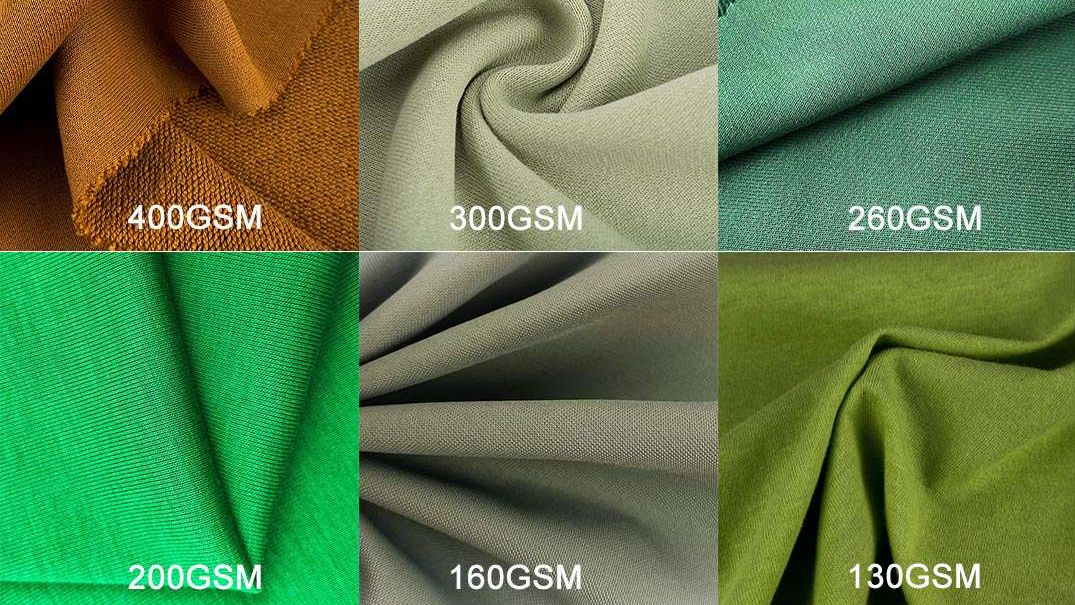
- Approximately 80–150 GSM: Commonly found in certain lightweight, thin fabrics suitable for lightweight shirts, linings, or summer clothing.
- Approximately 150–220 GSM: May be used for T-shirts, everyday clothing, and some medium-weight apparel fabrics.
- Approximately 220–300 GSM: Often found in heavier fabrics, such as heavyweight T-shirts, sportswear, or products requiring a more substantial feel.
- Above 300 GSM: May be used for fleece, heavyweight knitted fabrics, or certain specialized garments.
These are reference ranges rather than mandatory standards for every fabric type. The appropriate GSM of towels and fabrics should be selected based on the actual requirements of each product.
3.2. For Bath Towels and Hotel Towels
Bath towels are commonly evaluated based on absorbency, softness, user comfort, and durability after repeated washing.
Some reference GSM ranges include:
- Approximately 300–400 GSM: Relatively lightweight towels that generally dry quickly and are suitable for basic everyday use.
- Approximately 400–500 GSM: Medium-weight towels that may offer a balance between comfort, absorbency, and drying time.
- Approximately 500–600 GSM: Towels that generally feel thicker and heavier, making them suitable for applications where softness and water retention are important.
- Approximately 600–800 GSM: Some premium towel ranges fall within this category and typically provide a thicker, more substantial feel.
When selecting the GSM of towels and fabrics for hotels, businesses should not automatically choose the highest available weight. Heavier towels may increase the total laundry load and drying time, potentially affecting operational efficiency.
3.3. For Bed Sheets and Tablecloths
Bed sheets and tablecloths are generally selected based on material, fabric construction, hand feel, and their ability to withstand repeated washing.
For these products, GSM can help compare the weight of different fabrics, but it is not the only specification that determines quality. For example, cotton bed sheets and polyester bed sheets may have the same GSM but differ in softness, breathability, and overall comfort.
Therefore, businesses should evaluate all relevant technical specifications before making purchasing decisions.
4. Does a Higher GSM Mean Better Fabric Quality?
This is one of the most common misconceptions when selecting textile products. In reality, a higher GSM does not necessarily mean better quality in every situation.
A product with a higher fabric weight generally contains more material per unit area. This may create a thicker and more substantial feel, but it is not enough to conclude that the product has superior durability, absorbency, or overall quality.
For example, a high-GSM towel made from low-quality fibers or with unsuitable fabric construction may still become rough, shed fibers, or lose its absorbency after repeated washing.
Conversely, a towel with a lower GSM but made from high-quality fibers, with appropriate construction and proper finishing, may still perform well for its intended purpose.
Therefore, when evaluating the GSM of towels and fabrics, businesses should also consider the following criteria:
- Fiber Composition: Cotton, polyester, microfiber, and blended fibers have different characteristics in terms of softness, absorbency, and durability.
- Fabric Construction: Yarn density and weave or knit structure affect the surface, thickness, and overall feel of a product.
- Absorbency: This is particularly important for bath towels, face towels, and hotel towels.
- Mechanical Durability: The ability to withstand tensile forces, friction, and repeated washing cycles.
- Dimensional and Color Stability: These properties help products maintain their shape and appearance throughout their service life.
Therefore, GSM is an important specification, but it must be considered alongside other material characteristics to evaluate product quality comprehensively.
5. Factors That Can Affect the GSM of Towels and Fabrics
Although fabric weight is generally determined during manufacturing and quality inspection, the actual GSM of a product may change due to several factors.
Fiber Composition and Yarn Fineness: Fiber type and the way yarns are arranged within the fabric structure affect the weight per unit area.
Weave Density and Fabric Construction: Fabrics with different yarn densities or loop structures may have different GSM values, even when they are made from the same raw material.
Finishing Processes: Treatment, coating, or surface-finishing processes may change the weight and characteristics of the material.
Sample Moisture Content: This is a particularly important factor when measuring GSM. If a sample has not been conditioned under appropriate conditions before testing, residual moisture may cause its measured weight to be higher than its actual value.
Usage and Laundry Conditions: After repeated washing cycles, a product may change in weight due to shrinkage, lint loss, fiber shedding, or detergent residue. Therefore, measurements taken from used products may differ from their original fabric weight.
Controlling these factors helps ensure more accurate evaluations of the GSM of towels and fabrics, particularly during incoming quality inspections and when monitoring textile conditions after use.
6. How to Choose the Right GSM for Your Business
For hotels, hospitals, restaurants, and other facilities that use textiles regularly, fabric weight should be selected according to actual requirements rather than focusing solely on products with higher GSM.
Identify the Intended Use: Bath towels, face towels, bed sheets, tablecloths, and uniforms have different requirements. Businesses should determine where each product will be used, how frequently it will be used, and what level of comfort is expected.
Balance Thickness and Drying Performance: Towels with higher GSM may provide a thicker, more substantial feel but generally have greater weight. This should be considered when businesses need to wash and dry large quantities of textiles every day.
Evaluate Durability After Repeated Washing Cycles: A suitable product should maintain its shape, color, and functional properties under actual operating conditions. Quality should not be judged solely by how a product feels when it is first purchased.
Check Technical Specifications from Suppliers: When purchasing textiles, businesses should request information about GSM, fiber composition, dimensions, and other relevant quality criteria. For large orders, samples can be inspected before placing the final order.
Understanding the GSM of towels and fabrics helps businesses make more appropriate purchasing decisions based on their budgets, usage requirements, and laundry operating capacity.
7. Green Laundry – Focusing on Processing Efficiency and Textile Quality
In industrial laundry operations, every type of textile has its own characteristics in terms of material, dimensions, weight, and care requirements. Understanding technical specifications, including GSM, helps businesses better evaluate the volume and weight of textiles that need to be processed and select suitable operating methods.
Green Laundry aims to provide laundry solutions for business customers in sectors such as hotels, hospitals, restaurants, and other organizations with regular textile processing needs.
For products with different fabric weights, considering the GSM of towels and fabrics together with material composition, dimensions, and actual condition is an important basis for organizing laundry operations. In addition to cleaning performance, maintaining textile durability, color, and functional properties also requires attention.
Green Laundry strives to support businesses throughout their textile care and processing operations, helping maintain product quality and improve operational efficiency. If your business is looking for professional laundry solutions, contact Green Laundry to discuss your actual requirements and receive tailored advice.
GSM of towels and fabrics is a measurement that indicates the weight of a material per square meter. It is widely used in the textile industry to determine fabric weight and support comparisons between products.
Although GSM can help identify the weight category and certain relative characteristics of towels and fabrics, it is not the only factor that determines quality. Fiber composition, fabric construction, absorbency, durability, and intended use must all be considered together.
For businesses, understanding GSM helps with selecting suitable textiles, controlling procurement costs, and calculating the processing load in laundry operations. When this measurement is combined with other technical criteria, businesses can make more informed decisions, maintain textile quality, and improve operational efficiency.
>>>> Read more: Why is baking soda considered a powerful helper in laundry care?
Green Laundry – the leading company in providing quality and professional laundry solutions in Vietnam
Email: greenlaundry@giatuixanh.com
Phone: 028 36 222 180
Fanpage: Giặt Ủi Xanh – Chuyên Giặt Ủi Công Nghiệp
Address: Lot A57/II-Lot 58/II, Road No. 2D, Vinh Loc Industrial Park, Binh Tan Ward, Ho Chi Minh City.