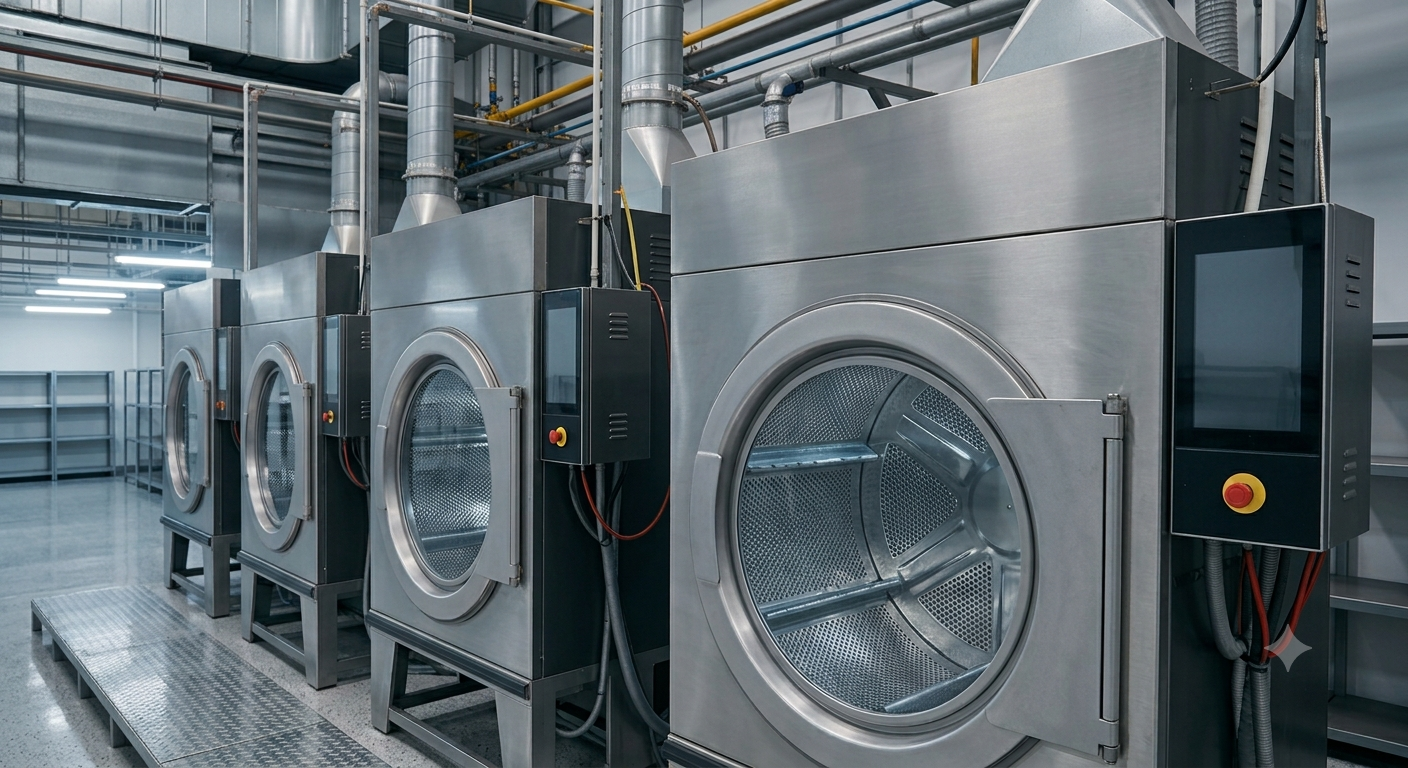
Industrial drying systems do more than simply dry garments quickly. They also help protect fabric fibers, maintain textile quality, and improve the overall efficiency of commercial laundry operations. Let’s explore how industrial drying systems contribute to longer-lasting garments and linens.
1. What Is an Industrial Drying System?
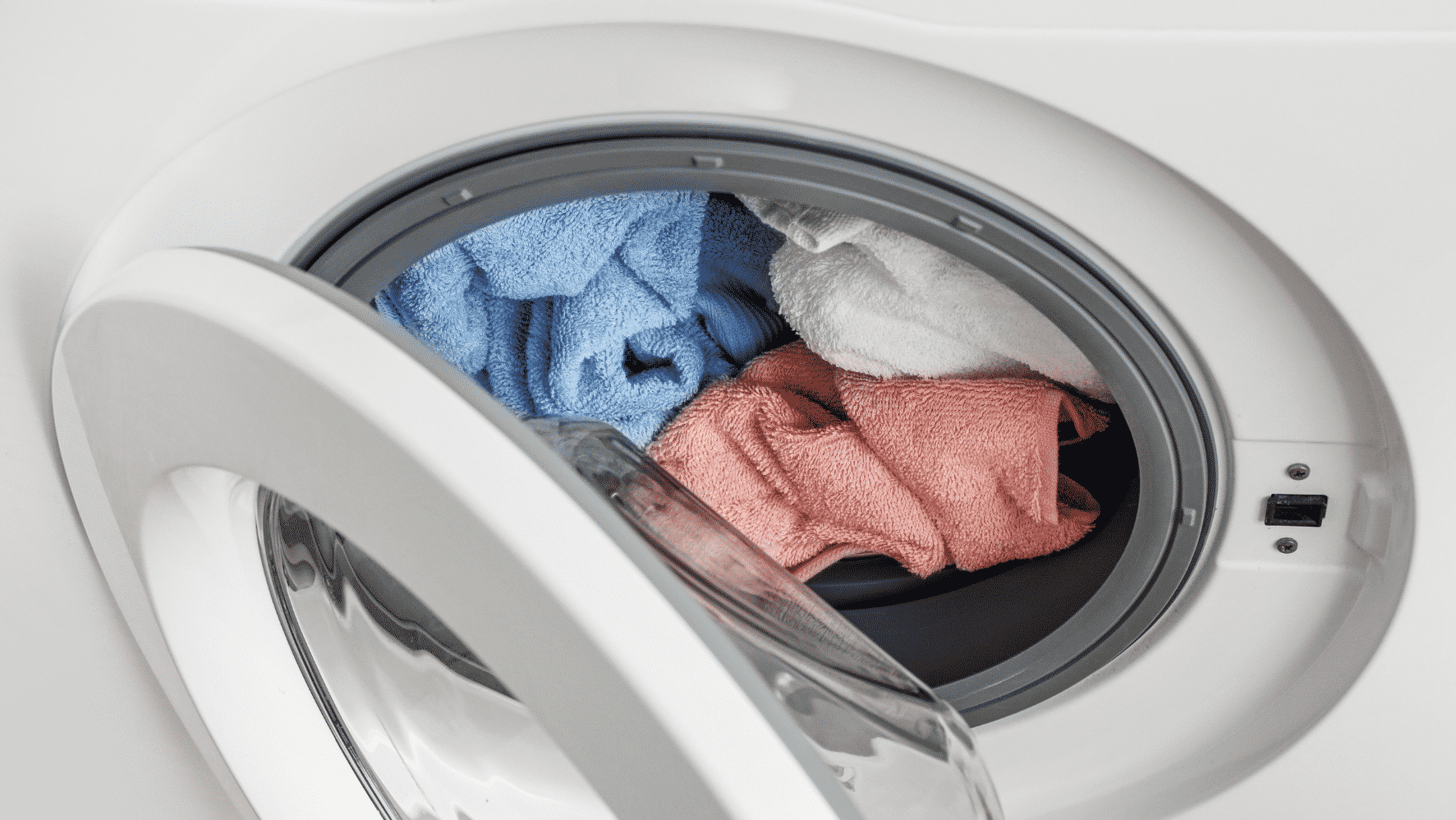
In commercial laundry operations, the drying stage is just as important as washing or finishing. Even after being thoroughly cleaned, garments and linens still retain a significant amount of moisture within their fibers. If this moisture is not removed properly, it can prolong the finishing process and negatively affect the quality of the cleaned textiles.
For this reason, industrial drying systems are widely used in modern commercial laundries. Unlike household dryers, these systems are specifically designed to process large volumes of textiles every day while accurately controlling essential operating parameters such as drying temperature, drying time, airflow, and drum rotation speed.
With stable performance and programmable settings tailored to different types of fabrics, industrial drying systems not only speed up the drying process but also help preserve fiber integrity, maintain textile quality, and optimize the efficiency of the entire laundry operation.
2. Why Does the Drying Process Affect Garment Lifespan?
Many people believe that the lifespan of clothing depends only on the washing process or the quality of the detergent. In reality, drying plays an equally important role in preserving textile durability.
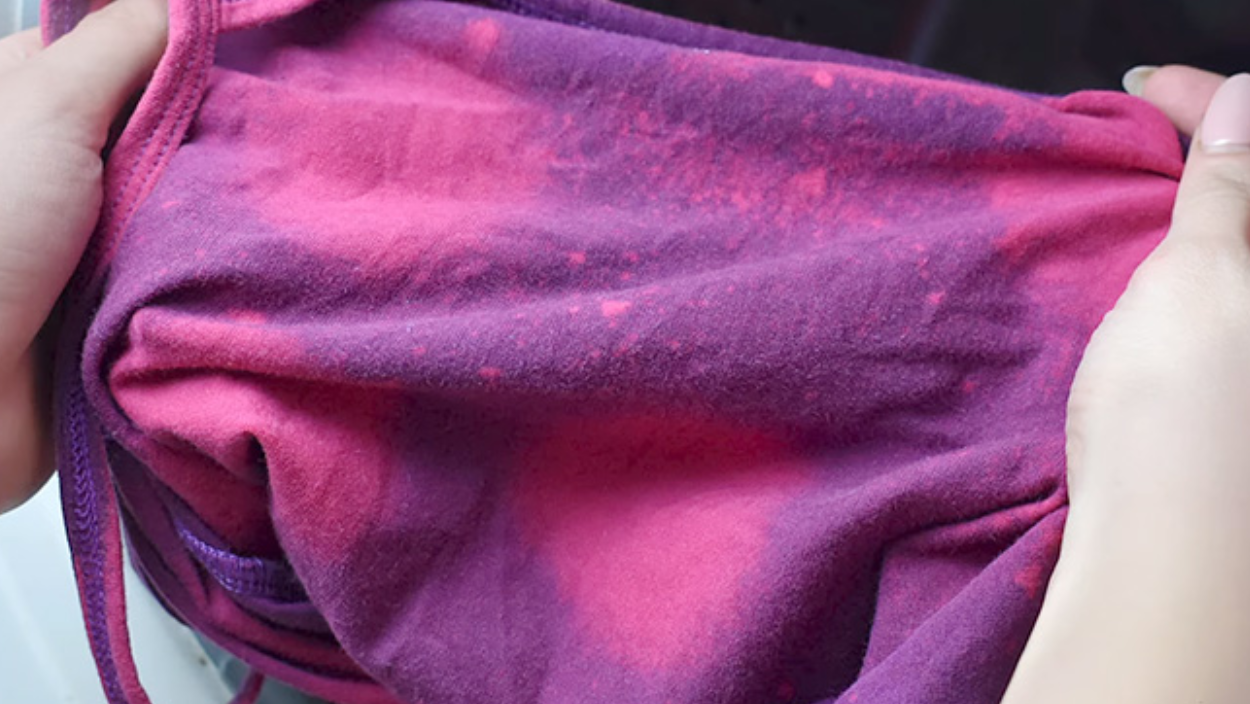
When garments are exposed to excessively high temperatures for prolonged periods, fabric fibers may lose elasticity, shrink, or become stiff. Certain materials may also fade, deform, or weaken after repeated improper drying.
Conversely, if the drying temperature is too low or the drying time is insufficient, residual moisture may remain inside the fabric. This moisture can encourage the growth of bacteria and mold, create unpleasant odors, and reduce the overall quality of the finished product.
A properly operated industrial drying system strikes the right balance between fast moisture removal and fabric protection, helping extend the service life of garments and other textile products.
3. How Industrial Drying Systems Help Preserve Garments
3.1. Precise Temperature Control for Different Fabric Types
Not all fabrics respond to heat in the same way. Cotton, polyester, microfiber, blended fabrics, towels, and other textiles each have unique fiber structures and heat tolerance.
One of the greatest advantages of an industrial drying system is its ability to adjust drying temperatures according to specific fabric categories. Instead of applying one fixed temperature to every load, the system can be programmed to meet the requirements of different textile types.
Proper temperature control minimizes the risk of shrinkage, stiffness, and fiber damage while ensuring garments are dried efficiently without compromising their original quality.
3.2. Even and Consistent Drying
Uneven drying is one of the factors that can shorten the lifespan of garments.
When some areas remain damp while others become completely dry, the finishing process becomes less efficient. Residual moisture may also lead to unpleasant odors or create storage issues.
Industrial drying systems combine continuous drum movement with optimized hot-air circulation to distribute heat evenly throughout the entire load. This ensures consistent drying while reducing the need for repeated drying cycles.
3.3. Reducing Shrinkage and Fabric Distortion
Shrinkage is one of the most common problems caused by excessive drying temperatures or unnecessarily long drying cycles.
Natural fibers are particularly sensitive to heat, making accurate temperature control essential to maintaining their original dimensions.
When properly programmed, industrial drying systems significantly reduce the risk of shrinkage while preserving the original shape and fit of garments. This is especially important for uniforms, bed linens, bath towels, and other textiles that require consistent dimensions throughout repeated use.
3.4. Minimizing Mechanical Stress on Fabric Fibers
Besides temperature, the mechanical movement during drying also affects textile durability.
If the drum rotates too aggressively or garments remain inside the dryer longer than necessary, excessive friction can cause pilling, abrasion, and premature fabric wear.
Modern industrial drying systems are designed with specialized drying programs for different textile categories, minimizing unnecessary mechanical stress. As a result, fabrics retain their softness and surface quality even after repeated washing and drying cycles.
3.5. Preserving Fabric Color and Surface Quality
Color is an essential aspect of a garment’s appearance. Continuous exposure to excessive heat may cause fabrics to fade or lose their original vibrancy over time.
Thanks to precise control over operating conditions, industrial drying systems help minimize the effects of heat on fabric dyes and fiber structures. This allows garments to maintain their color more effectively while reducing pilling and stiffness after repeated laundering.
For hotels, spas, hospitals, and other businesses where linens undergo daily washing and drying cycles, preserving the appearance and quality of textiles is essential for reducing long-term replacement costs.
4. The Role of Industrial Drying Systems in Commercial Laundry Operations
Industrial drying systems do far more than protect garments—they also improve the efficiency of the entire laundry process.
When linens are dried quickly and uniformly, subsequent processes such as ironing, folding, packaging, and delivery become faster and more efficient. This shortens turnaround times, increases productivity, and helps commercial laundries meet demanding production schedules.
Proper drying control also minimizes the need for additional drying cycles, reducing energy consumption while maximizing equipment efficiency. These benefits are particularly valuable for commercial laundry facilities focused on operational stability and sustainable growth.
5. Green Laundry Invests in Advanced Industrial Drying Systems to Enhance Service Quality
At Green Laundry, maintaining the quality of every textile after washing is one of our highest priorities. In addition to investing in advanced washing equipment, we continuously develop our industrial drying systems to ensure every garment and linen is processed under the most suitable drying conditions.
Each drying cycle is carefully controlled based on temperature, drying time, and customized operating programs for different textile categories. This standardized approach enhances finishing quality, protects fabric durability, and ensures consistent results across every batch.
For hospitals, hotels, spas, and businesses that process large volumes of linens every day, investing in advanced industrial drying systems not only supports timely order fulfillment but also ensures consistently high service quality over the long term.
Conclusion
Industrial drying systems are far more than machines that simply remove moisture from garments. They play a vital role in protecting fabric fibers, preserving color, maintaining garment shape, and extending the lifespan of textiles through repeated laundry cycles.
For commercial laundry providers, investing in modern industrial drying systems—combined with standardized operating procedures—helps improve service quality, optimize production efficiency, and meet the increasingly demanding expectations of customers across a wide range of industries.
>>>> Read more: Why is baking soda considered a powerful helper in laundry care?
Green Laundry – the leading company in providing quality and professional laundry solutions in Vietnam
Email: greenlaundry@giatuixanh.com
Phone: 028 36 222 180
Fanpage: Giặt Ủi Xanh – Chuyên Giặt Ủi Công Nghiệp
Address: Lot A57/II-Lot 58/II, Road No. 2D, Vinh Loc Industrial Park, Binh Tan Ward, Ho Chi Minh City.